
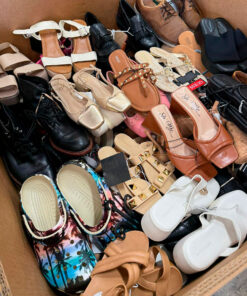
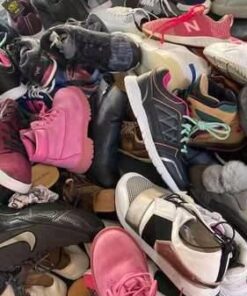
Buy Foot Locker Liquidation Pallets For Sale (250+ Pairs From $1,850)
$1,850.00
Current Price: From $1,850 per pallet
Status: In Stock – Limited Wholesale Lots Available
Seller: Verified Foot Locker Liquidation Distributor
Source: Foot Locker Overstock, Store Returns, Shelf Pulls & Closeouts
Condition: Mixed – Brand New, Like-New, and Customer Returns
Brands Included: Nike, Jordan, Adidas, Puma, New Balance, Converse
Items per Pallet: 250+ Pairs (Men’s, Women’s & Kids Mixed Sizes)
Estimated Retail Value: Up to $18,000+
Distribution Agreement Required: No
Shipping Area: Fast Freight Delivery Worldwide from USA Warehouse
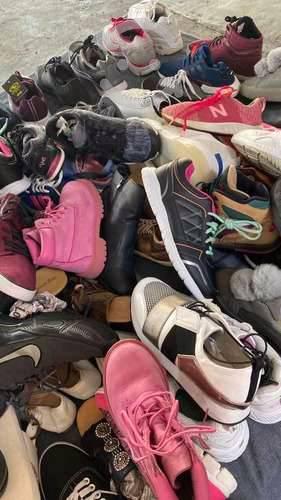
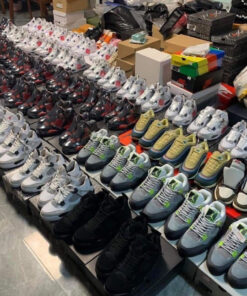
Foot Locker liquidation pallets are packed with high-demand athletic sneakers and streetwear footwear. These pallets are ideal for resellers, sneaker store owners, online sellers, and flea market vendors looking to stock trending brands with strong resale margins.
Each pallet contains a mixed variety of performance sneakers, lifestyle shoes, basketball shoes, running shoes, and limited seasonal releases.
Detailed Breakdown by Brand
Nike (80 Pairs)
Sizes: Mix of Men’s 7–13, Women’s 6–10, Kids 1Y–6Y
Note: Often includes Air Max, Air Force 1, Revolution, and running collections.
Jordan (50 Pairs)
Sizes: Men’s 8–13, GS sizes included
Note: May include Retro models, Team Jordans, and basketball editions with high resale value.
Adidas (45 Pairs)
Sizes: Men’s and Women’s mixed
Note: Frequently includes Ultraboost, NMD, Superstar, and training shoes.
Puma (30 Pairs)
Sizes: Mixed adult sizing
Note: Popular lifestyle and athletic styles.
New Balance (25 Pairs)
Sizes: Mixed
Note: Running and lifestyle classics.
Converse (20 Pairs)
Sizes: Mixed
Note: Chuck Taylor and seasonal colorways.
Example Distribution – Total 250+ Pairs
Performance & Running Shoes – Approx. 110 Pairs
Nike Running: 50
Adidas Running: 30
New Balance: 20
Puma Training: 10
Basketball & Streetwear – Approx. 90 Pairs
Jordan: 50
Nike Basketball: 25
Adidas Hoops: 15
Casual & Lifestyle – Approx. 50+ Pairs
Converse: 20
Puma Lifestyle: 20
Mixed Seasonal Styles: 10
What’s Inside Each Foot Locker Pallet
-
Athletic sneakers
-
Basketball shoes
-
Running shoes
-
Limited seasonal releases
-
Men’s, Women’s & Kids sizing
-
Original branded boxes on majority of pairs
-
Shelf pull inventory and store returns
These pallets are professionally wrapped and shipped via freight directly from our USA distribution center. Inventory rotates quickly due to demand from sneaker resellers and online marketplace sellers.
Return Policy: Sold As-Is – Wholesale Liquidation Terms Apply
Packaging: Secure Palletized Freight Wrap
Loading Type: Dock or Liftgate Service Available
Foot Locker Liquidation Pallets: Branded Inventory
The secondary market for athletic footwear is expanding rapidly as more entrepreneurs look for reliable inventory. If you are searching for a way to buy authentic sneakers in bulk, foot locker liquidation pallets offer a direct path to high-demand brands. These pallets often contain a mix of customer returns, overstock, and shelf pulls that are sold at a fraction of the retail price.
Navigating the world of bulk shoe buying requires a clear strategy and an understanding of how auctions function. Many resellers find success by focusing on the high resale value of brands like Nike, Jordan, and Adidas. However, it is important to know that buying in bulk involves risks regarding shoe condition and shipping logistics.
In this guide, you will learn how to access official auctions and what to expect inside each shipment. Whether you are a seasoned seller or a beginner, understanding the mechanics of these pallets is essential for profitability.
Key Takeaways
-
Register for a B-Stock account to access official Foot Locker auctions directly.
-
Verify the manifest carefully to understand the condition of the sneakers included.
-
Calculate shipping costs into your total bid to protect your profit margins.
-
Focus on “New in Box” or “Shelf Pull” inventory for the highest resale potential.
-
Resell individual pairs on platforms like eBay, GOAT, or StockX for maximum ROI.
-
Expect a mix of sizes and styles rather than a uniform run of one product.
-
Be prepared for a competitive bidding environment during peak retail seasons.
-
Use a resale certificate to avoid paying sales tax on your bulk purchases.
Foot Locker Liquidation Pallets
Foot locker liquidation pallets are bulk assortments of footwear and apparel that the retailer removes from its primary inventory. These pallets exist because large retailers need to clear space for new seasonal collections and handle returned items efficiently. Instead of selling items individually at deep discounts in-store, the company bundles them for professional resellers to purchase through auctions.
Liquidation differs from standard retail purchasing because items are sold “as-is” without the typical consumer protections or return rights. While retail buying involves picking specific sizes and styles, liquidation requires you to buy an entire lot based on a manifest. This method allows for a much lower cost per unit, which is the primary driver for resale businesses.
The resale potential for footwear and apparel buyers is significant due to the global demand for athletic brands. Sneakers are often considered a liquid asset in the secondary market because they retain value well. By sourcing these pallets, you are able to secure inventory that is otherwise restricted to authorized retail partners.
If you are ready to scale your business, you should start sourcing pallets through verified channels. Securing branded inventory at reduced costs is the most effective way to build a sustainable footwear resale operation.
What Is Foot Locker As A Brand And Why Does It Matter For Liquidation Buyers?
Foot Locker is a global leader in the athletic footwear and apparel industry with a massive retail footprint. It is the go-to destination for sneaker enthusiasts and athletes alike, which gives the brand immense weight in the market. For a liquidation buyer, the Foot Locker name serves as a mark of authenticity and quality for the items being sold.
Brand trust and recognition are vital when you are trying to move inventory on secondary marketplaces. Customers are more likely to purchase a pair of shoes if they know it originated from a reputable major retailer. This high level of recognition ensures that there is always a steady stream of buyers looking for the products you have in stock.
The reputation of the brand directly impacts the liquidation value because it reduces the marketing effort required to sell the items. You do not have to convince a customer that a Nike shoe is worth buying; the brand has already done that work. This inherent demand makes these pallets highly sought after by professional flippers and boutique owners.
What Products Are Typically Sold By Foot Locker Outside Of Liquidation Pallets?
The primary difference between retail product searches and liquidation intent is the level of control over the selection. In a retail setting, shoppers look for specific “Hype” releases or the latest performance gear. In the liquidation stream, products appear after they have finished their initial retail cycle or have been returned by a customer.
Popular product categories include basketball sneakers, running shoes, casual footwear, and athletic apparel like hoodies or jerseys. These items are the backbone of the Foot Locker business model and make up the bulk of their inventory. You will find brands like New Balance, Puma, and Converse alongside the major heavy hitters in the industry.
These products appear in liquidation streams because retail shelf space is a limited and expensive resource. When a new model is released, the older versions are moved out to make room for the latest trends. This cycle creates a consistent opportunity for resellers to pick up high-quality goods that are still very much in demand.
Why Do Buyers Search For Foot Locker Liquidation Pallets Specifically?
Buyers search for these pallets because they offer high profit margins and a reliable supply of branded goods. It is much easier to manage a business when you can source 100 pairs of shoes in one transaction rather than hunting for individual deals. The scalability of pallet buying is what attracts serious resellers who want to grow their operations quickly.
When you compare pallet buying to individual unit sourcing, the cost savings become very apparent. While you might pay a premium for a single pair at a clearance sale, the per-unit price in a pallet is significantly lower. This gap in pricing allows you to price your items competitively while still making a healthy profit on every sale.
Liquidation pallets are a scalable sourcing method for serious resellers who want to dominate a specific niche. By moving away from “retail arbitrage” and toward bulk liquidation, you can spend more time selling and less time driving between stores.
How Does Foot Locker Officially Sell Liquidation Pallets Through B-Stock?
Yes, Foot Locker uses an official partnership with B-Stock to distribute its excess inventory. B-Stock is a technology platform that hosts private marketplaces for the world’s largest retailers to sell their bulk goods. This partnership ensures that the liquidation process is transparent, organized, and accessible to verified business owners.
The purchasing model is strictly auction-based, meaning you must bid against other resellers to win a lot. Each auction has a set end time, and the highest bidder at that moment wins the entire pallet or truckload. This system allows the market to determine the fair price of the goods based on current demand.
There are business-only requirements that you must meet before you can participate in these auctions. Most notably, you are required to have a valid resale certificate from your state or country to prove you are a legitimate business. This process ensures that the inventory is going to professional sellers rather than individual consumers looking for a personal deal.
How Do You Register As A Buyer On The Foot Locker B-Stock Marketplace?
Registration involves several steps to verify your identity and business status. First, you must visit the official Foot Locker liquidation storefront on the B-Stock website and create an account. You will need to provide your business name, contact information, and specific details about your tax status.
Approval requirements usually involve submitting your resale certificate for review by the B-Stock team. This document proves that you intend to resell the items and are exempt from paying sales tax at the time of purchase. It can take a few business days for your application to be processed and for your account to be activated.
Documentation and business verification are non-negotiable parts of the professional liquidation world. Once you are approved, you will have the ability to view all active auctions, read detailed manifests, and place bids. It is a good idea to set up your account well before you plan to bid on your first pallet.
How Do Auctions Work When Buying Foot Locker Liquidation Pallets?
Auctions follow a structured format where the lot contents are clearly listed in a digital manifest. This manifest includes the brand, model, size, and estimated retail value of every item in the pallet. Bidding usually starts at a low price and increases as more buyers enter the fray for popular lots.
Pricing variability is common because no two pallets are exactly the same in terms of contents. A pallet filled with high-end basketball shoes will naturally attract higher bids than one filled with basic athletic apparel. Competition is also affected by the location of the inventory, as shipping costs play a major role in the final value.
Table 1: Comparison of Inventory Sources
| Source Type | Pricing Model | Buyer Control | Typical Quality |
| Direct Retail | Fixed MSRP | High (Select sizes) | Mint Condition |
| B-Stock Auction | Bidding | Medium (Manifest) | Mixed (New/Return) |
| Local Liquidation | Negotiated | Low (See it first) | Variable |
| Wholesale Distributors | Fixed Bulk Price | High (MOQ required) | New |
What Happens After You Win A Foot Locker Liquidation Pallet Auction?
After you win an auction, you are required to complete the payment within a very tight timeframe, usually 48 to 72 hours. Payments are typically made via wire transfer, which is the standard for high-value B2B transactions. Once the funds are cleared, the warehouse is notified to prepare your shipment for pickup or delivery.
Logistics and shipping are the responsibility of the buyer, although B-Stock often provides integrated shipping quotes. You can choose to use the platform’s preferred carriers or arrange for your own freight company to pick up the pallet. It is vital to ensure that your delivery location can handle a large truck and has a loading dock or a forklift.
Shipping and pickup responsibilities must be managed carefully to avoid extra storage fees at the warehouse. If you delay the pickup, you may be charged a daily rate for the space your pallet is occupying. Proper planning ensures that your inventory arrives at your facility quickly so you can begin the listing process.
What Alternative Platforms Sell Footwear Liquidation Pallets Besides Foot Locker?
Yes, several third-party liquidation platforms sell footwear, though they may not always have direct access to Foot Locker stock. Websites like BULQ, Liquidation.com, and Direct Liquidation often feature apparel and shoe lots from various department stores. These platforms are excellent for diversifying your inventory and finding different brands.
Inventory sourcing on third-party sites differs because they often act as middlemen who buy from retailers and then flip to smaller resellers. This can lead to higher prices compared to buying directly from an official brand marketplace like B-Stock. However, these sites sometimes offer smaller lots that are more affordable for beginners.
Risk profiles vary significantly between platforms based on how they grade their inventory. Direct sales from a retailer are usually more accurately described than lots that have been through multiple liquidators. You should always research the reputation of a platform before committing a large amount of capital to a purchase.
What Are The Biggest Risks When Buying Foot Locker Liquidation Pallets?
Manifest reliability is a major concern because mistakes can happen during the sorting process at the warehouse. While most manifests are fairly accurate, you may occasionally find a different size or model than what was listed. Being prepared for minor discrepancies is part of the “buy at your own risk” nature of liquidation.
Condition variability and grading are the most common points of frustration for new buyers. A pallet listed as “Grade A” might still contain items with damaged boxes or minor scuffs from being handled in a retail environment. Understanding the difference between a “Shelf Pull” and a “Customer Return” is essential for setting realistic expectations.
Table 2: Common Inventory Condition Grades
| Grade | Description | Resale Value | Box Condition |
| New Overstock | Never sold, brand new | 100% of Market | Perfect |
| Shelf Pulls | Displayed in store | 80-90% of Market | Minor Wear |
| Grade A Returns | Like new, returned | 70-85% of Market | May be opened |
| Grade B/C Returns | Used or damaged | 30-50% of Market | Likely damaged |
Market saturation is a resale risk that occurs when too many people are selling the exact same shoe at once. If a large liquidation lot of a specific model is released, the price on eBay or Poshmark might drop temporarily. You must perform due diligence to protect your capital and improve profit outcomes by checking current market trends.
How Much Do Foot Locker Liquidation Pallets Typically Cost?
Pricing ranges are highly dependent on the “MSRP” (Manufacturer’s Suggested Retail Price) of the items within the pallet. You can generally expect to pay between 15% and 30% of the total retail value for a standard lot. For example, a pallet with $10,000 worth of shoes might sell for anywhere from $1,500 to $3,000.
Auction dynamics have a massive effect on the final cost because emotional bidding can drive prices higher than expected. It is easy to get caught up in the excitement of a closing auction and bid more than you originally planned. Successful buyers always set a “max bid” based on their desired profit margin and refuse to go over it.
How Much Profit Can You Make From A Foot Locker Liquidation Pallet?
Profitability is determined by your ability to sell the individual items for more than your “landed cost” per unit. Landed cost is the price of the pallet plus shipping and any taxes or processing fees. If your landed cost is $25 per pair and you sell them for $60, you have a gross profit of $35 before platform fees.
Resale margins are also affected by your choice of sales channels. Selling on a platform like StockX might yield a higher price but involves higher shipping costs and strict authentication rules. Selling locally through Facebook Marketplace or at a physical flea market can eliminate shipping fees but may result in lower sale prices.
Table 3: Estimated Profit Calculation Example
| Item | Purchase Price (Landed) | Sale Price | Platform Fees (12%) | Net Profit |
| Nike Air Max | $35.00 | $95.00 | $11.40 | $48.60 |
| Adidas Ultraboost | $40.00 | $110.00 | $13.20 | $56.80 |
| Jordan Hoodie | $15.00 | $45.00 | $5.40 | $24.60 |
Which Liquidation Pallets Are Actually Worth Buying For Resale?
To evaluate pallet quality, you should look for lots that have a high “concentration” of popular brands and wearable sizes. A pallet that is 90% Nike and Jordan is generally a safer bet than one filled with unknown house brands. You should also check the size distribution to ensure the shoes are in sizes that are easy to sell (like Men’s 9 through 12).
Brand mix and product demand are the two most important factors in determining if a lot is worth your time. Research from the secondary sneaker market suggests that certain colorways and collaborations hold their value much better than basic models. Use tools like the Federal Trade Commission consumer guides to understand fair trade practices in liquidation.
What Makes A Liquidation Website Legitimate Or Risky?
A legitimate website will always have clear contact information, a transparent bidding process, and a secure payment system. Red flags include sites that only accept untraceable payments like Bitcoin or Western Union. Verified platforms like B-Stock are trusted because they are the direct partner for the retailer, eliminating the middleman.
Table 4: Trust Indicators for Liquidation Sites
| Feature | Legitimate Site | Risky Site |
| Payment Method | Wire Transfer / Credit Card | Crypto / Gift Cards |
| Manifest | Detailed Itemized List | Vague “General Description” |
| Contact Info | Physical Address / Phone | Email Only |
| Reviews | Third-party Verified | None or Fake-looking |
[Internal Link: How To Spot Liquidation Scams]
Can You Get Pallets For Free Or Start Liquidation With No Money?
No, it is not possible to get legitimate foot locker liquidation pallets for free. These items represent significant value to the retailer, and they will always seek to recover a portion of their costs through sales. Any advertisement offering “free pallets” is likely a scam designed to steal your personal information or lead you to a fraudulent site.
A realistic entry strategy for beginners with limited funds is to start with smaller “wholesale lots” rather than full pallets. You can also look for local footwear liquidators who might allow you to buy just a few boxes at a time. This allows you to build your capital gradually until you can afford a full-sized auction lot.
According to research from Harvard Business School on secondary markets, the liquidation industry is a vital part of the global supply chain. This means it is a professional business environment that requires an initial investment to enter and succeed.
Are There Legal Risks When Acquiring Or Selling Pallets?
Yes, there are legal considerations regarding how you represent and sell your inventory. You must be careful not to claim you are an “authorized dealer” for brands like Nike if you are simply a reseller. While it is perfectly legal to sell authentic goods you bought via liquidation, you must respect trademark laws in your advertising.
Pallet ownership laws are generally straightforward under the “First Sale Doctrine” in the United States. This doctrine allows you to resell a trademarked item once it has been legally purchased. For more information on business regulations, you can consult the U.S. Small Business Administration for guidance on starting a resale company.
How Long Do Pallets Last And Does Condition Affect Resale?
The physical lifespan of a pallet depends on how it is stored and handled during the shipping process. If a pallet is left in a humid or unconditioned warehouse, the shoe boxes can warp or grow mold. Structural wear on the pallet itself can also lead to items being crushed if they are stacked too high during transit.
Condition affects resale because sneaker collectors are very particular about the state of the original box. A “damaged box” can lower the value of a shoe by 10% to 20%, even if the shoe inside is perfect. You should always factor in the cost of replacement boxes or clear storage bins if the original packaging is unsalvageable.
Table 5: Business Startup Costs for Resellers
| Expense Item | Estimated Cost | Necessity |
| Resale Certificate | $0 – $50 | Required |
| Initial Inventory | $1,000 – $3,000 | Required |
| Shipping Equipment | $100 – $200 | Recommended |
| Storage Shelving | $200 – $500 | Recommended |
What Is Inside A Foot Locker Liquidation Pallet?
Inside these pallets, you will primarily find a mix of performance and lifestyle footwear from the world’s leading athletic brands. Common items include basketball shoes, cross-trainers, slides, and occasional pieces of premium athletic apparel. The assortment is usually a “blind” mix, meaning you get whatever was in the warehouse’s outgoing stream at that time.
Condition categories range from brand-new items that were never opened to customer returns that may show signs of light wear. You might find “mismates,” which are shoes of different sizes in the same box, though these are rare in high-quality manifests. Most professional buyers expect a small percentage of “defect” items and account for this in their bidding strategy.
Frequently Asked Questions About foot locker liquidation pallets
What Are Foot Locker Liquidation Pallets And How Do They Work For Resellers?
They are bulk lots of footwear and clothing sold through auctions to help the retailer clear out older stock. Resellers buy these lots to get a low per-unit price, allowing them to flip the items for a profit on secondary markets. The process is managed through online bidding platforms where buyers can view manifests before purchasing.
Are Foot Locker Liquidation Pallets Mixed With Returns, Overstock, Or Shelf Pulls?
Yes, most pallets contain a combination of all three categories, though some auctions are specific to one type. Overstock and shelf pulls are generally preferred because they have not been used by customers and usually come in their original packaging. Returns are more of a gamble but can often be cleaned up or sold as “pre-owned” for a high return on investment.
Be the first to review “Buy Foot Locker Liquidation Pallets For Sale (250+ Pairs From $1,850)”
Related products


Clothing Pallets


Clothing Pallets


Clothing Pallets


Clothing Pallets
Clothing Pallets


Clothing Pallets
Clothing Pallets
Clothing Pallets
Reviews
There are no reviews yet.