
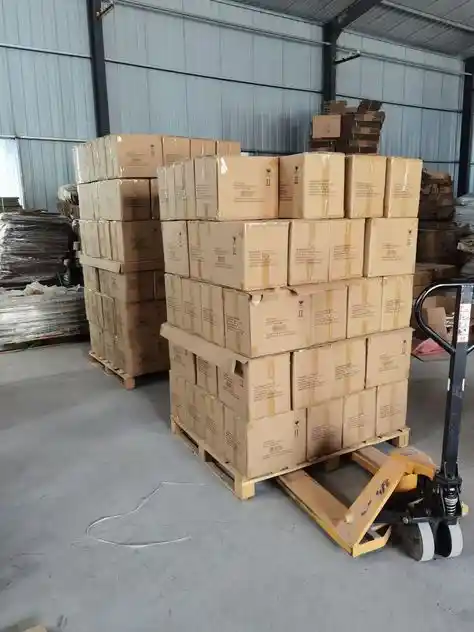
Buy Bloomingdale’s Liquidation Pallets (50+ to full truckloads-$500)
$500.46
Current Price: From ~$500+ (varies by load size, condition & manifest)
Status: In Stock – Limited Quantity
Seller: Verified Department-Store Liquidator / Overstock Reseller
Source: Bloomingdale’s excess inventory, shelf-pulls, customer returns & overstock
Condition: Mixed – new, like-new & shelf pulls (often branded items)
Colors: Mixed – assorted styles, brands & categories
Items per Pallet: 50+ to full truckloads (depending on purchase size)
Distribution Agreement Required: Yes – Buyer business certificate/resale licence often required
Shipping Area: Freight delivery within the U.S. (export possible via freight-forwarder)
Detailed Manifest Example – Standard 200+ Item Pallet
Total Items: 200+ Mixed Units
Designer & Premium Apparel (Approx. 125 Items)
• Women’s Apparel: 70 Items – Dresses, Tops, Activewear, Denim (Sizes XS–XL)
Top Pallet Liquidators
• Men’s Apparel: 40 Items – Shirts, Sweaters, Pants (Sizes S–XXL)
Top Pallet Liquidators
• Children’s Apparel: 15 Items – Seasonal Pieces (Various Sizes)
Top Pallet Liquidators
Footwear & Accessories (Approx. 30 Items)
• Shoes: 20 Pairs – Women’s & Men’s Fashion Shoes (Sizes 6–12)
Top Pallet Liquidators
• Accessories: 10 Items – Belts, Scarves, Wallets, Hats
Top Pallet Liquidators
Handbags & Small Goods (Approx. 25 Items)
• Handbags & Crossbodies: 15 Pieces – Mixed Styles & Colors
Top Pallet Liquidators
• Small Accessories: 10 Items – Jewelry, Sunglasses, Wallets
Top Pallet Liquidators
Beauty & Fragrance (Approx. 20 Items)
• Perfumes & Skincare: 20 Units – Mixed Designer Sets & Full-Size Bottles
Top Pallet Liquidators
What’s Inside Each Pallet (Typical Mix)
• Apparel: 60–70% of pallet units — fashion tops, pants, dresses, jackets (designer and contemporary)
Top Pallet Liquidators
• Footwear & Accessories: 15–20% — varied sizes and styles with strong resale appeal
Top Pallet Liquidators
• Handbags & Small Items: 10–15% — handbags, wallets, belts, jewelry
Top Pallet Liquidators
• Beauty & Fragrance: 5–10% — perfumes, skincare kits, gift sets with high per-unit value
Top Pallet Liquidators
Buying Tips:
• Focus on manifested pallets with detailed item and brand breakdowns before purchase.
Closeout Explosion
• Verify supplier credentials and condition grading (A, B, or C) to assess resale potential.
Closeout Explosion
• Shipping is typically LTL freight; coordinate loading dock access or liftgate service for delivery.
Closeout Explosion
Key Takeaways
- Data is Profit: Never buy an unmanifested lot. Use the manifest to calculate your maximum bid (Max 10%–15% of retail value for returns).
- Supplier Vetting: Only partner with vendors who explicitly show the grade and source to avoid “cream-skimming.”
- Focus on Grade: Prioritize Grade A or B stock to minimize processing costs and maximize your recovery rate.
- Cost Clarity: Include freight, platform fees, and processing labor into your final cost calculation to ensure a real profit margin.
- Scale Smart: Transition from single pallets to full Luxury Liquidation Truckloads for the lowest cost-per-unit advantage.
Ready to move beyond low-margin goods and start profiting from high-end designer inventory? Request a quote now to check the current availability of our Bloomingdale’s liquidation stock and lock in your first profitable pallet or truckload.
Bloomingdale’s Liquidation Pallets
Acquiring designer liquidation stock from a major retailer like Bloomingdale’s involves a structured, step-by-step approach that separates profitable resellers from unsuccessful bidders. The process requires establishing credibility, understanding the channels, and applying a sharp, analytical eye to inventory manifests. This level of merchandise demands a professional approach, recognizing the potential for significantly higher margins compared to general-merchandise liquidation.
The first critical step is ensuring you operate with the necessary credentials. You must possess a valid wholesale license (or state equivalent resale certificate) and register as a professional buyer on major B2B auction platforms. This instantly filters out casual buyers and grants you access to premium, high-volume inventory not available to the general public. Once registered, you must be explicit in your search strategy, using high-intent phrases like “Bloomingdale’s liquidation pallets” and “liquidation pallets for resale” to target the right lots immediately.
Where To Buy Luxury Liquidation Truckloads And Pallets?
Finding high-end department store merchandise requires looking beyond general liquidation sites and focusing on specialized B2B channels. The inventory from major retailers flows through a controlled network of direct liquidation platforms, specialized B2B auction houses, and direct-to-reseller programs. We recommend focusing on platforms that partner directly with top-tier department stores, as this ensures the most direct, un-tampered-with supply chain.
There’s a strategic choice to be made when purchasing: do you buy by the pallet or commit to an entire Luxury Liquidation Truckload? Buying a truckload dramatically reduces your per-unit cost and solidifies your inventory for scaling. Pallets are great for testing the waters and proving a concept, but truckloads are the mechanism for true business growth in the wholesale liquidation space. The volume of a truckload signals your business is ready for serious scaling.
Selling Point: Get started with luxury wholesale today! Explore our curated list of trusted suppliers and unlock exclusive introductory offers to maximize your initial investment.
What Should I Look For In A Liquidation Supplier Of Designer Brands?
Vetting a supplier in the luxury liquidation market is the single most important action you can take to protect your capital. Your supplier is an extension of your business; their transparency and reputation directly impact your bottom line. You must treat this step like hiring a key business partner, prioritizing transparency and verifiable history above all else.
Always insist on clear, verifiable information regarding the merchandise source (e.g., Bloomingdale’s, Nordstrom) and the specific condition grade. Look for consistent positive customer reviews and detailed business profiles. The greatest risk in this sector is the practice of “cream-skimming,” where sellers remove the highest-value items before selling the lot. A reputable supplier sells the manifest as is, providing the raw data you need to assess the full lot value. Avoid any vendor who cannot provide a high-resolution, itemized manifest.
What Are The Best Strategies For Buying Bloomingdale’s Liquidation Pallets?
A successful purchasing strategy is anchored in data, not emotion. You must approach every auction or wholesale lot with a defined budget and a clear, non-negotiable maximum bid. This bid must be calculated backward from your estimated resale value, factoring in all logistics and fees.
A critical strategy is niching down. Rather than buying a general assortment, focus on a specific segment like luxury women’s apparel or designer accessories. This builds expertise, reduces the time needed for listing, and allows you to command higher prices on your chosen resale platforms. The ultimate tool for assessment is the manifest. It’s the blueprint to the pallet’s value and risk profile.
How To Read A Manifest And Determine The Value Of The Items In Your Bloomingdale’s Liquidation Pallets
The liquidation manifest is the contract between you and the pallet’s value. Ignoring it is financial negligence. A well-structured manifest provides a line-by-line inventory detailing the Retail Value, Quantity, SKU, and most importantly, the Condition of each item. This document allows you to shift from guessing to calculating.
To determine your maximum profitable bid, you must apply a Recovery Rate to the total retail value of the pallet. A common rule of thumb for customer returns is to bid a maximum of 10–15% of the total retail value, but this is a starting point. High-value, in-demand designer items may justify a higher rate. Analyze the mix: two high-end designer bags worth $1,000 each are often more profitable and faster-moving than fifty low-value items in poor condition.
The table below illustrates how two pallets with the same item count can have drastically different liquidation values based on the Condition Grade:
| Condition Grade | Description of Inventory | Average Resale Value % of Retail | Max Bid (as % of Retail) |
| Grade A | New, Retail Box Intact, Overstock | 70% – 90% | 12% – 18% |
| Grade B | Customer Returns, Light Use, Open Box | 50% – 70% | 8% – 14% |
| Grade C | Damaged, Missing Parts, Heavier Wear | 20% – 40% | 3% – 7% |
Source: Internal industry data and reseller interviews.
A pallet heavily weighted toward Grade A stock has a higher cost of entry but significantly lower processing risk and a much higher potential resale recovery percentage. This helps you maximize margin and reduce returns.
What Is The Profit Margin For Pallets Of High End Designer Liquidation?
The profit margin for reselling designer brand wholesale is highly variable, but success often sees an average return on investment (ROI) between 40% and 80%, particularly on manifested lots with clear Grade B or better goods. However, unmanifested lots are inherently riskier, often yielding lower, less predictable returns. The true financial clarity comes from factoring in hidden costs.
| Hidden Cost Category | Example Cost | Impact on Final Profit |
| Shipping & Freight | LTL or Truckload Cost, Accessorials | Can reduce ROI by 10% – 20% |
| Resale Platform Fees | eBay Final Value Fee (13.25%), Poshmark (20%) | Essential fee, must be in cost model |
| Processing Time | Labor cost for testing, cleaning, listing | Lower margin if processing is slow/complex |
Source: Based on operational data from successful B2B liquidation buyers.
Your true profit is the Resale Revenue minus your total investment (purchase price + all fees and labor). We provide tools to help you calculate your true profit. Book a freight consultation to lock in your logistics costs upfront.
What Are The Risks Of Buying Bloomingdale’s Liquidation Pallets?
The high reward of the luxury liquidation market comes with distinct risks that must be acknowledged and mitigated. The most common pitfall is overbidding on lots that have not been adequately analyzed. This is the Problem (P) of the PAS framework: The risk of overpaying for damaged or misidentified inventory.
The largest financial risk comes from unmanifested or “mystery” boxes and pallets. Without a manifest, you are speculating on the contents, and statistically, these lots have a much lower success rate, leading to potential loss. Furthermore, scaling up to large Luxury Liquidation Truckloads requires adequate, secure, and climate-controlled storage space to protect high-end merchandise from damage, which is an easily overlooked operational cost.
The sheer volume of liquidation stock flowing from retailers is a significant financial trend, as confirmed by government data on retail trade. The U.S. Census Bureau tracks retail inventory, demonstrating the massive scale of returns and overstock that feeds the liquidation market (U.S. Census Bureau, Annual Retail Trade Survey).
What Should You Avoid When Buying Name Brand Pallets?
To maintain a profitable business, you must be skilled at identifying red flags in the liquidation industry. The Agitation (A) of the PAS model is the frustration of being tricked: The feeling of unpacking a pallet only to find the best items are gone.
You must immediately avoid:
- Vague Descriptions: Pallets labeled simply “Designer Assortment” with no brand list.
- No Manifest: The absence of a detailed manifest is a non-starter for high-value goods.
- Unreasonably Low Prices: If the price is too good to be true, it likely means the seller has already conducted cherry-picking and removed the high-value items, leaving you with the residue.
The only way to buy with confidence is to demand transparency. This ensures you are buying a complete, un-sorted lot and building a reputable supplier relationship. For further clarity on best practices in business purchasing, resources from the Small Business Administration (SBA) can offer actionable guidance (SBA, Business Guide).
What Brands Can You Expect In A Luxury Pallet From A Department Store?
Pallets sourced from high-end department stores like Bloomingdale’s are expected to contain a substantial mix of HIGHER END BRANDS that hold their value in the resale market. This is the inventory that drives high margins and gives your store a competitive edge.
The inventory typically includes a variety of categories:
- Women’s Apparel: Contemporary and designer dresses, separates, and activewear.
- Men’s Apparel: Premium denim, tailored shirts, and designer outerwear.
- Accessories: Designer handbags, wallets, sunglasses, and women’s bloomingdales shoes.
- Home Goods: Upscale linens, specialty kitchenware, and high-end decor.
The mix is the beauty and the complexity. A single pallet can hold dozens of brands, meaning you need to be prepared to sell across multiple categories and price points. The commonality is the quality and the retail origin—a mark of consumer trust.
How Can I Effectively Resell Merchandise From Bloomingdale’s Liquidation Pallets?
Effective resale for high-end goods requires presenting your merchandise on the right platforms with absolute accuracy. This is the Solution (S) of the PAS model: Implement a high-quality, professional listing strategy to command premium prices.
- Platform Choice: Utilize both high-traffic general marketplaces (eBay) and luxury-focused consignment/resale sites (Poshmark, Mercari) to maximize exposure.
- Photography: High-quality, clear photographs are non-negotiable. Shoot items on a neutral background with strong, even lighting.
- Description: Be meticulous. Always note the condition (Grade A, B, or C), the precise size, and explicitly state the retail origin to leverage the credibility of the Bloomingdale’s brand.
For items like women’s bloomingdales shoes or designer bags, detailed close-ups of logos, soles, and tags are essential to satisfy buyer authenticity concerns.
Role Of Bloomingdale’s Clearance And Returns In Liquidation Stock
Liquidation pallets are not a single type of inventory; they are a mix of goods that have left the traditional retail cycle. Understanding the composition is key to predicting your profit.
The inventory breaks down into three main categories:
- Overstock/Shelf Pulls: Brand new, excess stock that did not sell. This is generally Grade A inventory.
- Customer Returns: Goods returned via policies like “bloomingdale’s easy returns.” This is the bulk of the stock, generally Grade B or C.
- Final Offer/Clearance: Items sold at deep consumer discounts (e.g., “bloomingdales final offer“) that were not sold and are now being liquidated in bulk.
The volume of returns from retailers is a consistent, reliable supply chain for the liquidation industry. Sourcing primarily returns means lower initial purchase cost but requires more labor for inspection and cleaning.
How Do Bloomingdale’s Sales Differ From Liquidation And What Are The Best Deals?
It is crucial to differentiate between consumer-facing promotions and B2B liquidation.
| Opportunity | Buyer Type | Purpose | Discount Depth |
| Bloomingdale’s Sales (“Bloomies Sale”) | Retail Consumer | Driving foot traffic, clearing seasonal stock | 20% – 50% Off Retail |
| Liquidation Pallets | B2B Reseller | Bulk clearance of end-of-life inventory | 85% – 95% Off Retail (before bid) |
While a consumer benefits from a “bloomies sale” on a single item, the liquidation buyer benefits from a massive bulk discount after the product line has been fully cleared from the retail ecosystem. The liquidation space offers access to the lowest cost-per-unit, which is the foundational competitive advantage for any reseller.
What Is A Grade B Pallet And How Does It Affect The Cost Of Bloomingdale’s Liquidation Pallets?
A standard liquidation grading system is essential for communication and valuation. A Grade B pallet typically signifies customer returns with light wear, open box, or minor cosmetic defects. The items are generally complete, functional, and in good to excellent condition, but no longer classified as “New.”
The condition grade is the biggest driver of the initial purchase price:
- Grade A: Highest price, lowest risk, highest resale recovery.
- Grade B: Mid-range price, acceptable risk, strong resale recovery after processing.
- Grade C/D: Lowest price, highest risk, lowest and most unpredictable resale recovery.
You can expect to pay more for a Grade B pallet than a C, but the reduced processing time and higher eventual selling price make the Grade B investment safer and often more profitable overall. A detailed study of this grading system is available through industry research into reverse logistics (Council of Supply Chain Management Professionals, Industry Reports).
What Is The Growth Of The Luxury Liquidation Market?
The Luxury Liquidation Market is growing rapidly, fueled by the massive growth of e-commerce and subsequent customer returns. As consumers buy more online, returns escalate, creating a reliable and increasing supply of luxury brand wholesale suppliers. Sourcing Bloomingdale’s inventory is a strategic move that positions your business in a high-growth sector with consistent consumer demand. This is not a short-term trend; it is the modern business of retail recovery.
Frequently Asked Questions About Bloomingdale’s Liquidation Pallets
Are Bloomingdale’s Liquidation Pallets Worth Buying For Profit?
Absolutely, yes, provided you employ a data-driven strategy and vet your supplier. The high average retail value of designer goods ensures a strong margin potential even after a significant discount. The profit is secured by reading the manifest, focusing on Grade B or better stock, and accurately calculating your total costs.
What Types Of Designer Labels Are Included In Bloomingdale’s Wholesale Pallets?
While specific manifests vary, you can consistently expect to find a range of premium and designer labels spanning contemporary fashion, luxury accessories, and upscale home goods. This allows you to serve a high-income customer base that seeks discounted, authentic designer merchandise.
6 reviews for Buy Bloomingdale’s Liquidation Pallets (50+ to full truckloads-$500)
Add a review
Related products


Liquidation Pallets

Liquidation Pallets


Apple Liquidation Pallets


Apple Liquidation Pallets


Tool pallets for sale


Liquidation Pallets


Liquidation Pallets


Liquidation Pallets
Daniel R –
Solid mix of apparel and accessories in our pallet. Manifest matched what arrived, which was reassuring. Took some time to sort but overall very profitable.
Melissa J. –
We started with a smaller pallet to test quality and were impressed. Mostly clean items, lots of recognizable labels, and packaging was intact.
Aaron L. –
Bought for our resale boutique and the assortment worked well. A few slow movers but margins were strong on handbags and beauty items.
Lauren M. –
Everything felt professional from paperwork to delivery. Items were consistent with grading provided.
Kevin P. –
We’ve ordered from multiple suppliers and this was one of the smoother experiences. Easy resale on several pieces.
Sandra T. –
Nice balance of apparel and accessories. Sorting took a day but returns covered the pallet cost quickly