
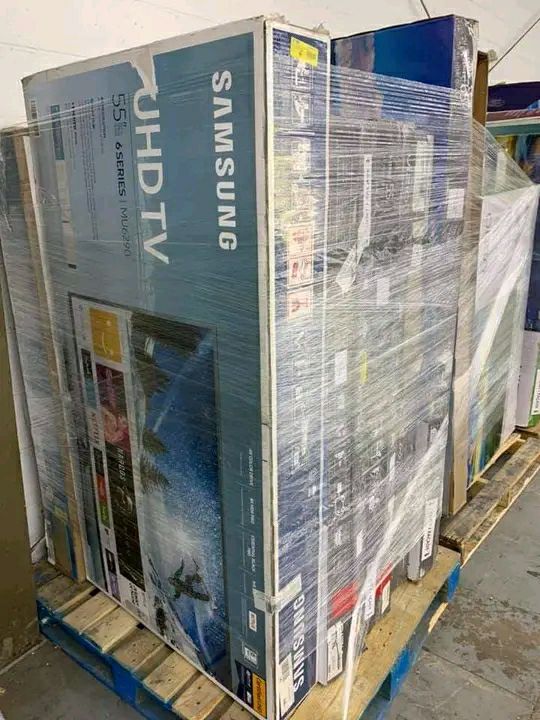
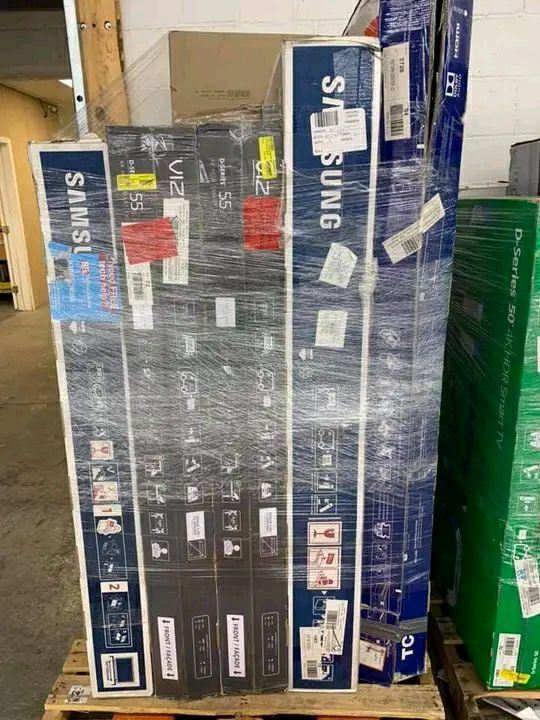

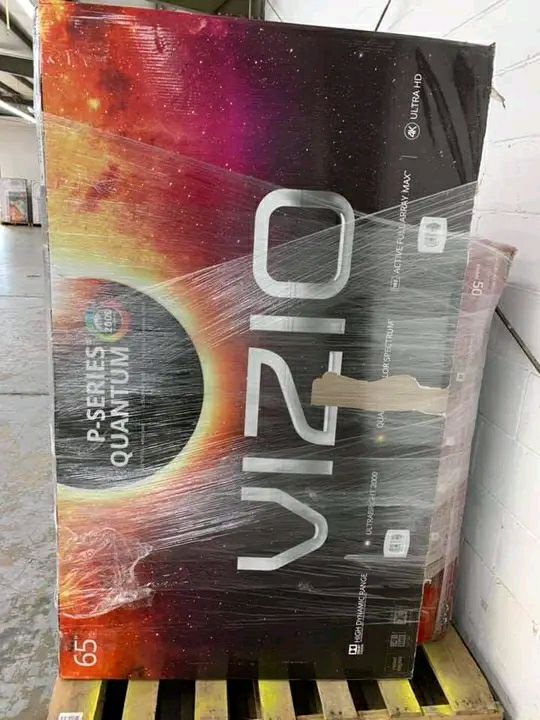
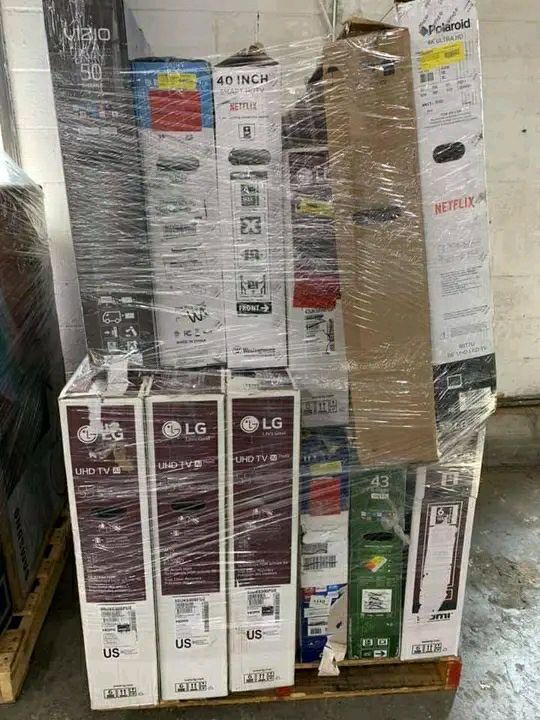
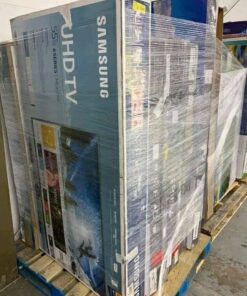
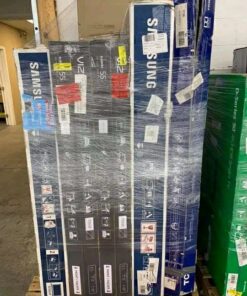

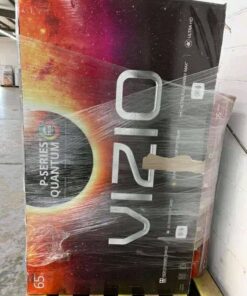
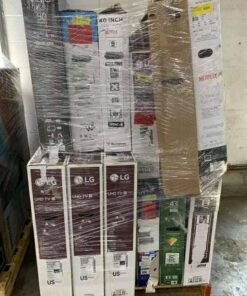
Buy TV Pallets for Resale (10–50 TVs- $599)

$599.86
TV pallets
Current Price: From approx. $599
Status: In Stock – Limited Quantity
Seller: Verified Electronics Liquidation Specialist
Source: Overstock, Returns, Shelf Pulls of Branded TVs
Condition: Mixed – Brand New and Like-New (Factory Sealed & Open Box)
Colors: Mixed – Black/Silver Frames (various models)
Items per Pallet: Approx. 10–50 TVs (Sizes from 32″ to 85″)
Distribution Agreement Required: No (in many cases)
Shipping Area: USA Nationwide (Freight Delivery)
What users really want to know before they buy:
-
The mix of brands, sizes and models included (entry-level to premium) and how many units per pallet.
-
Whether the TVs are truly new/sealed or open-box/returns and the condition breakdown.
-
Shipping/freight costs and logistics (weight, dimensions, delivery).
-
Minimum purchase quantity, any business license required, and how quickly inventory moves.
-
Expected resale margin: what you paid vs typical resale price for individual units.
-
Any additional costs (customs, duties if exporting, local delivery).
Detailed Breakdown by Brand (Typical Mix)
Samsung (20–30 Percent of Pallet)
Screen Sizes: 43 Inch, 50 Inch, 55 Inch, 65 Inch
Notes: Often includes Smart TVs and UHD models with high resale demand.
LG (15–25 Percent of Pallet)
Screen Sizes: 32 Inch, 43 Inch, 55 Inch, 65 Inch
Notes: Popular for picture quality and Smart TV features.
Sony (10–15 Percent of Pallet)
Screen Sizes: 43 Inch, 50 Inch, 65 Inch
Notes: Premium resale value, often Android TV models.
TCL (15–25 Percent of Pallet)
Screen Sizes: 40 Inch, 50 Inch, 55 Inch, 75 Inch
Notes: Strong budget-friendly resale performance, Roku TVs common.
Vizio and Other Brands (10–20 Percent of Pallet)
Screen Sizes: Mixed
Notes: Includes Vizio, Hisense, Insignia, and similar brands.
Example Distribution (Realistic Mix) – Total: 25 TVs
Large Screen TVs (10 Units)
55 Inch to 75 Inch models
Higher resale value, ideal for local marketplace sales
Mid-Size TVs (10 Units)
43 Inch to 50 Inch models
Fast-moving inventory for online and retail resale
Small TVs (5 Units)
32 Inch to 40 Inch models
Great for dorms, offices, and budget buyers
What’s Inside Each TV Pallet
• Smart TVs and Non-Smart TVs
• LED, UHD, and 4K Displays
• Assorted screen sizes and brands
• Mixed cosmetic conditions
• Retail packaging and open-box units
• Some units may need testing or minor repair
Who Should Buy TV Pallets
• Electronics resellers
• Amazon, eBay, Facebook Marketplace sellers
• Discount electronics stores
• Flea market and swap meet vendors
• Repair shops sourcing parts and refurb units
Resale Value Potential
• Small TVs resale range: $80 to $150
• Mid-size TVs resale range: $150 to $350
• Large TVs resale range: $350 to $700+
• High profit potential when sold locally to avoid shipping costs
Key Takeaways
- Risk Mitigation: Always start with suppliers who offer detailed manifests, showing brand, model, and condition to control your risk exposure.
- Logistics Check: Calculate LTL (Less-Than-Truckload) freight costs before bidding or purchasing. Distance can kill your margin.
- Vetting is Vetting: Use official sources to verify the legal standing of any liquidator you plan to work with to ensure trust and avoid fraud.
- Sales Channel: Match the quality of your pallet to the right platform; high-end Grade A TVs sell better on Amazon/your e-commerce site, while Grade C units are best for parts on eBay.
- Inverted Pyramid (Recap): The fastest profit comes from the few Grade A/B units. Prioritize getting those ready for market immediately.
Ready to secure a high-demand, high-profit electronics inventory for your business? Contact Direct Wholesale Liquidation today to check our latest TV Pallet manifests and book your freight-optimized order.
TV Pallets
TV pallets are bulk lots of televisions—often mixed brands, sizes, and conditions—packaged together for efficient wholesale sale. These lots are the cornerstone inventory for electronics resellers, offering a significant discount over purchasing individual units. They are sold on a single pallet, usually shrink-wrapped and stacked carefully to minimize transit damage.
These product bundles typically include a range of product types, from standard LED models to high-end OLED and QLED smart TVs. The most common sources for these valuable inventories are major retailers offloading customer returns, end-of-season overstock, and discontinued models. When sourced correctly, these pallets allow businesses or resellers to acquire premium inventory at 30% to 70% below wholesale cost.
Maximize your profit margins by sourcing top-quality TV pallets directly from verified distributors—perfect for startup retailers and online sellers. Check our current manifest availability now.
What Is Inside A Typical Smart TV Pallet?
The contents of a smart TV pallet can vary widely based on the liquidation source, but most contain a mix of leading and mid-tier brands (e.g., Samsung, LG, Vizio, TCL). Typically, you will find screens ranging from compact 32-inch units up to massive 85-inch 4K or 8K resolution displays. Packaging status ranges from factory-sealed to open-box or damaged original cartons.
Critical details like the product condition (new, refurbished, damaged, for parts) and included accessories (remotes, stands) are documented in the pallet manifest. This manifest is the most important tool for the buyer, providing a virtual look inside the shipment before you buy. Understanding these details is essential for accurate inventory valuation.
The table below illustrates the typical mix a buyer might encounter in a mixed-condition smart TV pallet and the associated grading, which directly impacts your resale strategy.
| Condition Grade | Description | Expected Retailer Source | Resale Strategy |
| A (New/Overstock) | Factory-sealed, current or recent models. | Seasonal clearance, warehouse surplus. | Premium pricing, quick flip. |
| B (Tested Returns) | Open box, tested and confirmed working; minor cosmetic flaws. | Customer returns within policy (7-30 days). | Below retail, focus on e-commerce platforms. |
| C (Untested/Salvage) | Untested returns; potential for major defects or missing parts. | End-of-life products, bulk-lot clearouts. | Parting out for components, repair/refurbishment. |
Buying a smart TV pallet means you are betting on the mix. A clear manifest helps you balance the risk of Grade C units against the guaranteed profit of Grade A and B stock, ensuring you maximize your total yield.
What Makes TV Pallets Ideal For Bulk Resale?
TV pallets are popular among professional retailers and opportunistic resellers due to their combination of high profit potential and manageable logistics. Unlike clothing or small consumer goods, a single pallet of TVs can represent thousands of dollars in resale value, justifying the freight and storage costs. There is a consistent, high-dollar demand for electronics, especially smart TVs, regardless of the season.
The pallet-based inventory model provides a critical advantage over individual sourcing: inventory stability. You secure 10–20 units in a single transaction, locking in bulk discounts and reducing the administrative overhead of sourcing item-by-item.
Unlock bulk discounts and inventory stability—TV pallets are the go-to for building a reliable electronics reselling business. Request a quote to see our latest manifest list.
How To Buy TVs In Bulk At Wholesale Prices?
Purchasing bulk TVs at a true wholesale price requires using specific channels. Professional resellers primarily rely on direct liquidators, dedicated liquidation marketplaces, or authorized manufacturer clear-out programs. These channels ensure you are bypassing intermediary brokers and securing the lowest cost per unit.
To vet a supplier, look for transparent business practices, verified physical addresses, and an excellent history of customer service. You should always request a manifest and a clear set of terms and conditions. Furthermore, reputable wholesalers will require business credentials, such as a Resale Certificate or Tax ID, a practice that filters out non-serious buyers and prevents tax fraud, establishing a level of trust (U.S. Internal Revenue Service, 2024).
The table below outlines common business credentials required by a top-tier liquidation company to finalize a bulk purchase.
| Credential Type | Purpose | Requirement Level |
| Resale Certificate/Tax ID | Exemption from sales tax for inventory intended for resale. | Mandatory |
| Business License | Proof of legitimate commercial operation in your state/country. | Often Required |
| Proof of Funds (for large orders) | Assurance that the buyer can complete high-value transactions. | Required for $10k+ Orders |
| Valid Government ID | Verification of the purchasing agent’s identity. | Mandatory |
To secure your pricing and check availability, gather your documents and check availability with our team. We vet all buyers to ensure a fair and compliant marketplace.
Where Can You Find The Best TV Liquidation Pallets?
The best sources for TV liquidation pallets combine deep discounts with transparency. Online, this includes dedicated liquidation platforms like B-Stock, which aggregates inventory from major retailers, and direct supplier portals like our own. Offline, local liquidation warehouses offer the advantage of “near me” savings by lowering freight costs significantly.
When seeking local suppliers, you must verify their credibility. Check their business registration records with the Secretary of State’s office in their jurisdiction to confirm longevity and legal standing (Secretary of State, 2024). Furthermore, most trusted local liquidators will allow an in-person, pre-purchase inspection. This critical step lets you assess the pallet’s external condition, confirm packaging integrity, and verify that the items match the provided manifest.
| Source Type | Advantage | Disadvantage | Best For |
| Direct Liquidators | Highest manifest transparency, best unit cost. | Less variety than marketplaces. | Focused, high-volume buyers. |
| Online Marketplaces | Massive variety from many retailers. | Higher competition, potential for hidden fees. | New resellers, finding specific brands. |
| Local Warehouses | Lower freight costs, in-person inspection. | Limited inventory selection. | Buyers seeking “near me” convenience. |
What Are The Different Types Of TV Pallets Available?
TV pallets are differentiated primarily by the technology they contain and the sorting method used by the liquidator. Buyers can choose between pallets containing older LCD screens, modern LED units, or premium-technology units like OLED and QLED smart TV pallets. The technology type dictates the ultimate resale value and customer base.
Pallets can also be sorted by brand (e.g., all Samsung or all Sony) or offered as mixed-brand pallets. While mixed pallets offer diversification, brand-sorted pallets appeal to resellers specializing in a particular brand’s parts or refurbishment needs. Lastly, buyers often face a choice between high piece count (many smaller, less valuable units) and premium value (fewer, larger, high-end units).
Can You Choose Specific TV Brands In Your Order?
Generally, liquidation is about taking the ‘lot’ as-is to secure the deep discount. However, some professional suppliers offer custom or curated pallets for their highest-volume buyers. This process usually involves sorting higher-demand inventory (e.g., specific smart TV brands known for rapid resale value) and packaging them into a slightly more expensive, but far more predictable, lot.
The advantage of selecting specific brands is predictability in resale value and customer demand. For instance, a pallet of a widely-recognized, high-end brand will have a higher customer conversion rate and may command a slight premium on platforms like eBay or Amazon compared to mixed-brand stock. The limitation is that this often reduces the depth of the initial discount.
Where To Buy TV Pallets Through Auctions And Bidding Platforms?
Online auction and bidding platforms are essential sources for TV pallets, offering a dynamic way to secure inventory below fixed wholesale prices. Leading platforms include Liquidation.com, B-Stock, and 888 Lots. These sites host large-scale retailer clearance events, allowing you to bid on various lot sizes and conditions.
A crucial bidding strategy is to set your maximum price based on a conservative estimated resale value minus a generous cushion for shipping and unknown defects. Reserve pricing means the seller has set a minimum; if the bid does not meet the reserve, the item will not sell. This introduces a slight risk, but direct liquidation platforms often have no-reserve auctions, which can be highly beneficial for experienced buyers.
Expert Tip: Before engaging in an auction, analyze the winning bids on similar items over the past 90 days. This data provides a realistic expectation of the final cost and prevents overbidding.
What Are The Pros And Cons Of Buying Overstock TV Pallets?
Overstock TV pallets are one of the ‘safest bets’ in the liquidation world.
| Pros of Overstock Pallets | Cons of Overstock Pallets |
| 1. Unused Items: Often factory-sealed and brand-new. | 1. Outdated Models: Often last year’s technology or discontinued lines. |
| 2. Warranty Availability: May still carry an active manufacturer warranty. | 2. Bulk-Only Deals: Rarely sold in small lot sizes. |
| 3. Highest Resale Margin: Minimal testing/refurbishment required. | 3. Higher Initial Cost: Priced higher than returns or salvage. |
Overstock differs significantly from returns or salvage stock. Overstock is simply inventory a retailer has an excess of; it is not defective. Returns may be defective or just unwanted, requiring a full testing and grading process. By securing overstock, you minimize the risk and labor associated with the Grade C salvage stock.
What Should You Expect From A TV Wholesale Pallet?
A standard TV wholesale pallet often contains a piece count ranging from 10 to 15 mixed units. Due to the increasing popularity of larger screens, expect a mix of TV sizes from mid-range 40-inch models up to premium 75-inch units. Common brands included are those from major U.S. and global electronics manufacturers.
The most important expectation to manage is the condition breakdown. Even in a pallet labeled “Untested Returns,” you can often secure a few Grade A or B units that significantly offset the cost of the units needing repair.
This table provides a typical breakdown and the resulting inventory valuation for a reseller.
| Inventory Component | Expected Quantity (15-Unit Pallet) | Estimated Profit Potential (per unit) |
| Grade A (New/Sealed) | 2 – 3 Units | $150 – $300 |
| Grade B (Tested Working) | 5 – 7 Units | $80 – $150 |
| Grade C/D (For Parts/Repair) | 5 – 8 Units | $10 – $50 (for parts) |
By securing inventory with a clear manifest, you are protected against the extreme unknowns and can create a more accurate profit projection.
How Do You Start A TV Reselling Business With Pallets?
Starting a TV reselling business is straightforward once you secure reliable inventory. The basic flow involves: Sourcing (finding a trusted liquidator like Direct Wholesale Liquidation), Storage (securing a clean, dry warehouse space), and Selling (listing on platforms like eBay, Facebook Marketplace, or your personal e-commerce site).
Focusing your sales on popular platforms with existing traffic allows you to minimize marketing spend initially. Listing the item condition accurately is vital for building a trusted seller profile. Use the manifest as your source of truth.
Start your reselling business today—TV pallets offer low investment entry with high resale ROI. Request a quote from our sales team to select your first load.
Who Should Consider Buying Wholesale TV Pallets?
Wholesale TV pallets are ideally suited for several types of buyers:
- Electronics Resellers: Individuals or small companies whose primary business is selling electronics on marketplaces.
- E-commerce Stores: Online retailers looking for high-ticket, consistent inventory to boost store revenue.
- Tech Refurbishers: Businesses with the technical skill to repair Grade C or D units for a significant profit margin.
- Exporters: Companies who move U.S.-sourced inventory to international markets with high demand.
Bulk orders also benefit organizations like schools or event venues that require numerous identical or low-cost TVs for institutional use.
What Factors Determine The Value Of A TV Pallet?
The true value of a TV pallet is a complex equation, not just a price tag. The most significant factors are brand reputation (a pallet of Sony is worth more than a lesser-known brand), screen size (larger sizes command a higher value), and the specific technology type (OLED is more valuable than standard LED).
Crucially, manifest transparency and product condition are the variables you can assess before buying. A pallet with a clear, verified manifest is instantly worth more than an ‘unknown lot’ because it reduces your risk. Packaging status (original, open-box, or generic) also affects the final resale price and shipping cost. The more you know, the better your valuation will be (Bureau of Economic Analysis, 2024).
How To Identify High Piece Count TV Pallets Worth Buying?
High piece count generally refers to pallets containing a large number of smaller units, often 32-inch or 40-inch TVs, rather than a few massive 75-inch sets. This type of pallet is worth buying for buyers who prioritize volume over premium price per unit, such as those running high-volume eBay stores or supplying budget-focused retailers.
These pallets are often ideal for refurbishers who benefit from the large number of potential salvageable parts or for those who can reliably move high volumes of lower-cost stock. While the risk of defective units is higher, the sheer quantity can still lead to a substantial overall profit if your process is optimized for efficiency.
Frequently Asked Questions About TV Pallets
How Do TV Pallets Work And Why Are They Profitable For Resellers?
TV pallets work by bundling products that are individually difficult for a retailer to sell (returns, overstock) into a single, easy-to-move wholesale unit. They are profitable for resellers because the bulk discount is substantial, providing a margin of 30% to 70% below the typical wholesale price. By focusing on testing and accurately listing the Grade A and B units, resellers can quickly recover their investment and profit from the remaining stock.
How Do TV Liquidation Pallets Differ From Regular Wholesale Pallets?
Regular wholesale pallets typically contain brand-new, factory-sealed products, often current models, purchased directly from the manufacturer or authorized distributor. TV liquidation pallets are sourced from excess inventory, returns, or salvage, meaning the condition is often mixed (new, open box, damaged) and the cost is significantly lower. Liquidation involves risk but offers a higher potential ROI.
6 reviews for Buy TV Pallets for Resale (10–50 TVs- $599)
Add a review
Related products

Tool pallets for sale
Buy Halloween Pallets For Sale (200+ Costumes & Decor From $399)
Tool pallets for sale
Buy Ryobi Tool Pallets for Sale (60+ Power Tools from $1,200)
Tool pallets for sale
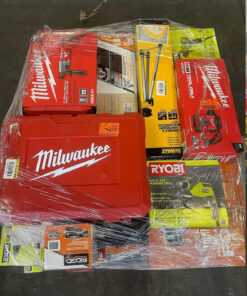

Tool pallets for sale
Buy Milwaukee Pallets For Sale (50+ Premium Items from $1,200)
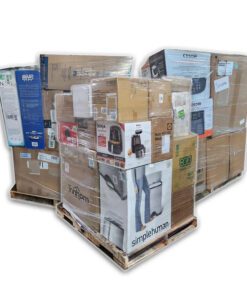
Tool pallets for sale


Tool pallets for sale


Tool pallets for sale


Tool pallets for sale
Marcus T. –
Picked up a pallet to test local Facebook Marketplace demand. Mix leaned toward mid-size smart TVs and a couple larger units. Everything powered on after testing. Solid experience overall.
Elena R. –
Bought one pallet as a trial run for my electronics shop. Freight arrived on time and packaging was secure. A few open-box units but nothing unexpected.
Daniel K. –
This pallet made sense financially. Sold two larger TVs locally and covered most of my cost quickly. The rest is profit once listed online.
Sophie M. –
Good brand mix and reasonable condition spread. Testing took some time but that’s part of the business. Would order again.
Brian L. –
Inventory moved faster than expected. Larger screens sold locally within days. Smaller ones are steady movers online.
Natalie P. –
Packaging was better than other pallets I’ve purchased elsewhere. Minimal cosmetic issues and no cracked screens.