
Buy Tool Liquidation Pallets (45-120+ items-$750)

$750.19
Tool liquidation pallets
Current Price: From ~$750
Status: In Stock – Limited Quantity
Seller: Verified tool liquidation/overstock liquidator
Source: Retail returns, overstock, shelf-pulls from major home improvement stores and brand tool suppliers
Condition: Mixed – some brand-new/sealed, some open-box or customer returns
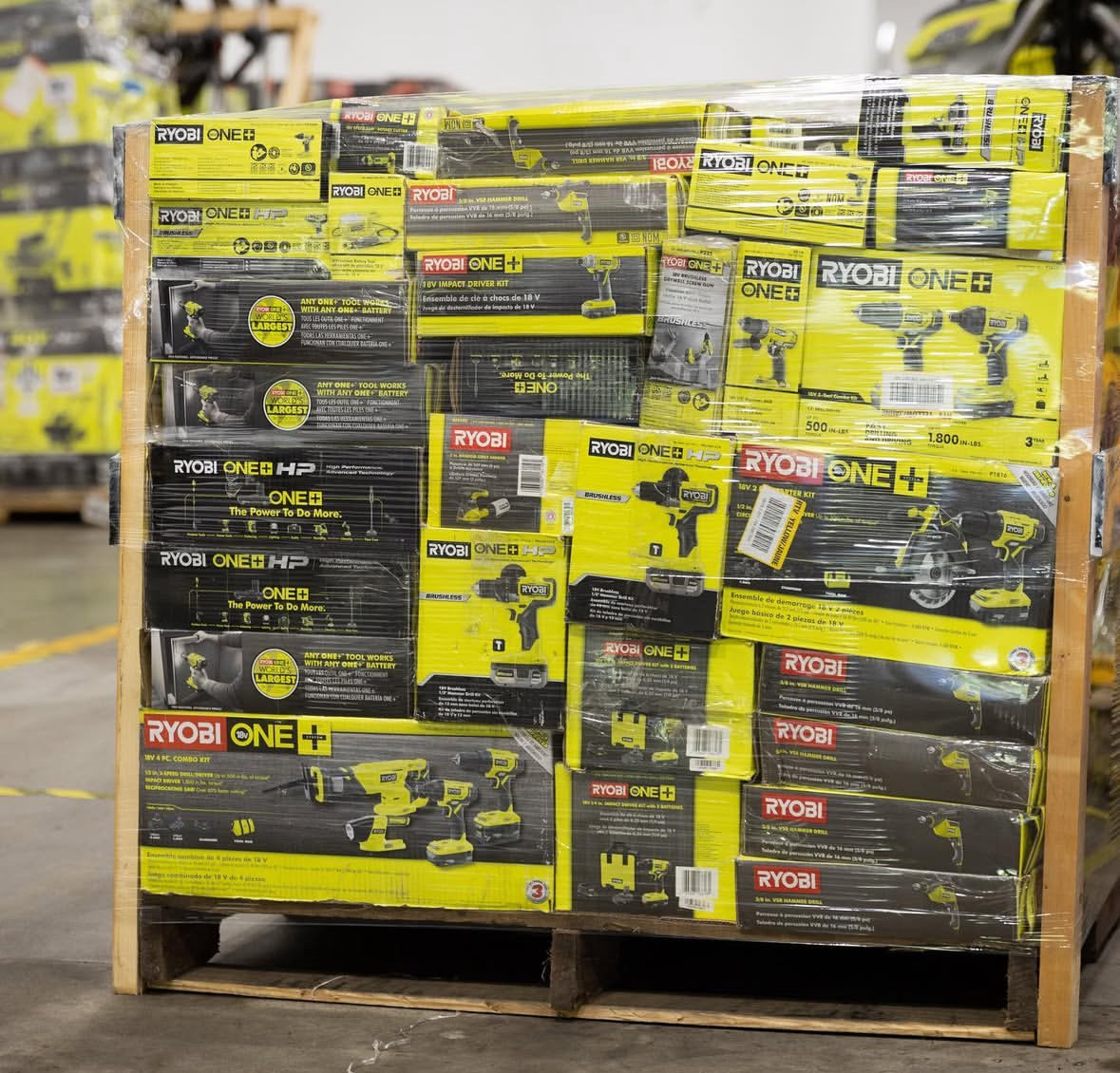
Brands Included: Top tool brands like Dewalt, Milwaukee, Ryobi, Makita, Bosch and more
Items per Pallet: Typically 45-120+ items (hand tools + power tools)
Shipping Area: USA freight shipping (some sellers mention international, but U.S. domestic preferred)
What users really want to know before they buy:
-
Manifest clarity: Ensure you get a detailed item list or manifest so you know what brands/models you’re receiving. Many sellers provide these.
-
Condition breakdown: Know proportion of new vs returns/used. The mix influences resale value and risk.
-
Shipping/freight costs: Pallets ship via LTL freight with lift-gate service often required; factor shipping into cost.
-
Resale value/profit margins: Many sellers quote retail value vs cost to show profit potential—e.g., $750 cost, $5,000+ retail value.
-
Returns/sales policy: Understand if items are final sale, condition warranty, or allow returns—some liquidation may be “as is”.
Key Takeaways
This page is your complete guide to building a business with tool liquidation pallets. Here’s what you need to know to get started and scale your profits:
- High-Demand Inventory: Tool pallets are filled with products from brands like Milwaukee, RYOBI, and RIDGID, which have a built-in, massive resale market.
- Multiple Sources: Pallets originate from customer returns, overstock, and shelf-pulls, each offering different risk and reward profiles.
- Profit Is in the Process: Flipping tool pallets is a proven business model. Success depends on smart sourcing, accurate testing, and effective listing.
- Risk vs. Reward: “AS-IS Untested” pallets offer the lowest cost and highest potential margin, but they require you to be comfortable with testing and potential repairs.
- Start Now: You can start this as a side hustle from your garage and scale it into a full-time warehouse operation. The barrier to entry has never been lower.
Ready to find your first profitable pallet? View Direct Wholesale Liquidation’s live inventory of tool pallets and secure your next load today.
Tool Liquidation Pallets
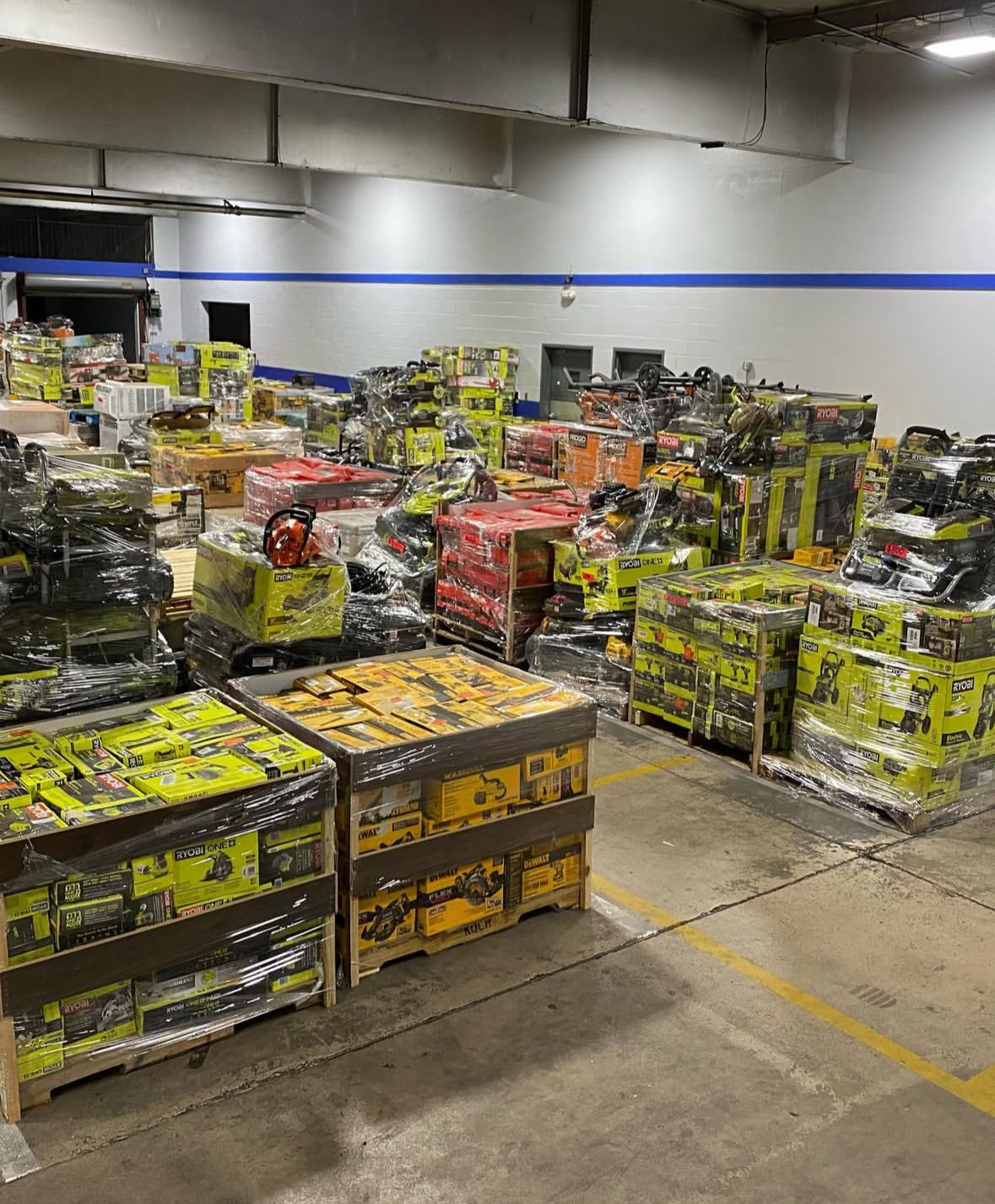
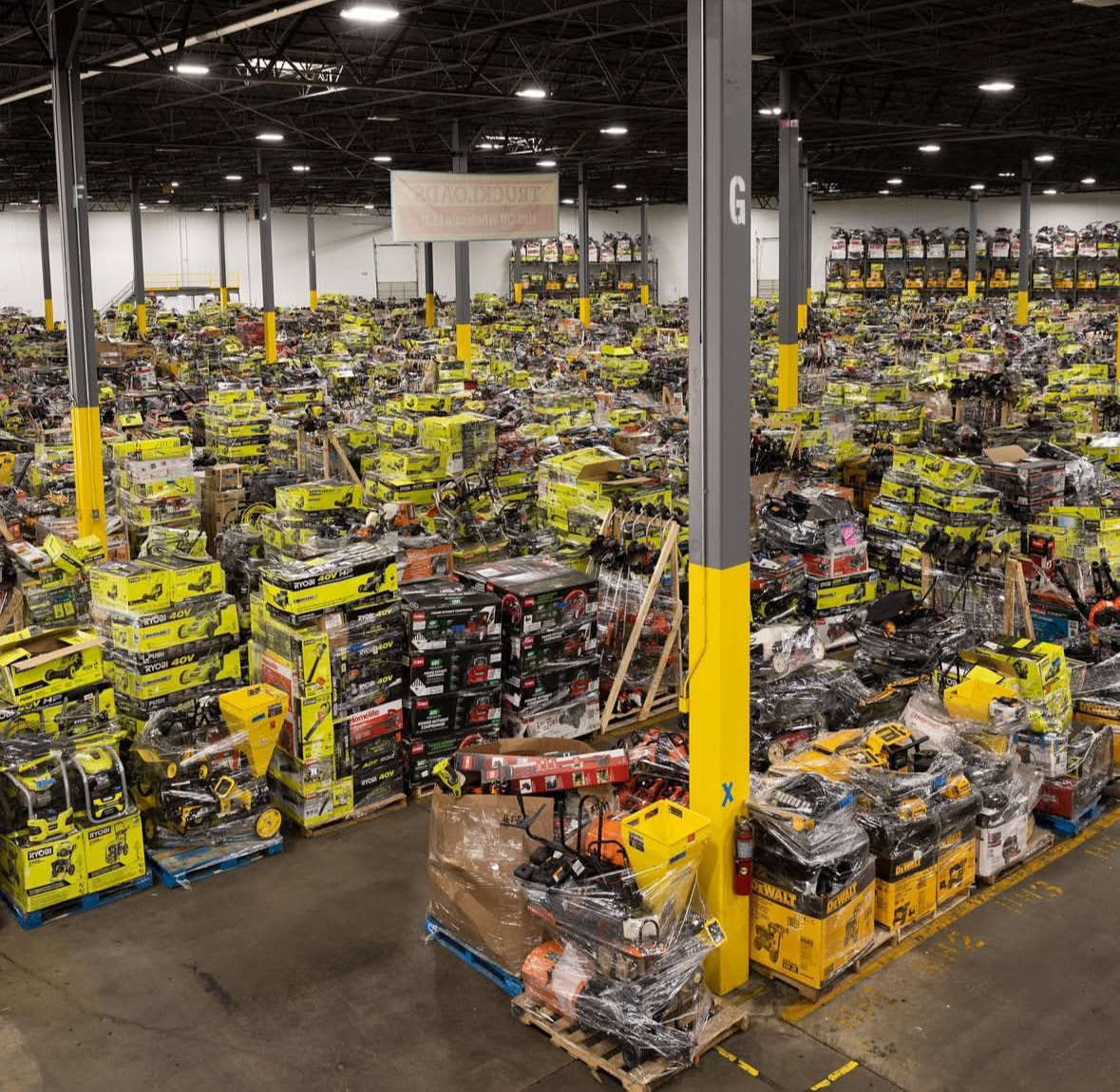
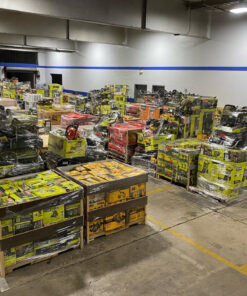
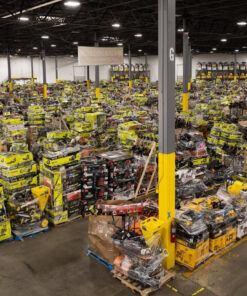
Tool liquidation pallets are large, palletized shipments of tools sourced from major retail stores, home improvement centers, and online marketplaces. These are not tools you buy one at a time. Instead, you are buying an entire lot, often containing hundreds of items, at a fraction of their original retail value.
These pallets exist because big-box stores need to clear space. They gather items that can no longer be sold as new. This includes:
- Customer Returns: The most common source. A buyer uses a drill once and returns it.
- Overstock: The store bought too many of a specific saw and needs to clear shelves for new models.
- Shelf Pulls: Items with damaged packaging or that are from a previous season.
The retailer’s goal is to recover some cost and free up valuable warehouse space. Your goal as a reseller is to capture this inventory. You buy the entire pallet, sort and test the contents, and then sell the individual items for a significant profit on platforms like eBay, Facebook Marketplace, or at local flea markets.
How To Buy Tool Pallets And Secure The Best Deals?
Securing the best deals on tool pallets requires a strategy. It’s not just about finding the cheapest lot; it’s about finding the right lot for your business. The essential first step is to partner with a reliable, trustworthy liquidation supplier. Avoid random listings and look for established wholesalers who provide clear manifests and transparent terms.
Once you have a supplier, the process involves a few key steps:
- Register: Sign up for an account. Most professional liquidators (like us) require a business registration or resale certificate to give you access to wholesale pricing.
- Browse Inventory: Review available tool pallets. Pay close attention to the manifest (item list), the condition code (e.g., “Returns”), and the shipping origin.
- Calculate Costs: Factor in the pallet cost plus shipping. Freight is a significant part of your total investment, so get a freight quote before you buy.
- Purchase: Secure your pallet through a “Buy Now” option or by winning a pallet auction.
We’ve seen thousands of new buyers find success. To help you, we created a free buyer’s guide and checklist to find your ideal tool pallet. Check out our free Buyer’s Guide to get supplier ratings, negotiation tips, and a checklist for your first purchase.
Where Can I Buy Pallets Of Tools Near Me?
Resellers have two main options for sourcing tool pallets: local liquidation stores or large-scale online suppliers like Direct Wholesale Liquidation. While searching for “tool pallets near me” might show local, independent warehouses, they often have inconsistent stock and higher prices dueTo their own overhead.
Online liquidation marketplaces provide access to a much larger, national inventory. You can browse pallets from dozens of warehouses across the country, giving you a better selection of brands and price points. While you must factor in freight costs, the per-item cost is often significantly lower due to the scale of the operation.
Here is a quick comparison to help you decide which sourcing method is right for your business. This table breaks down the pros and cons of buying from a small, local shop versus a national online distributor.
| Feature | Local Liquidation Warehouse | Online National Supplier (Direct Wholesale Liquidation) |
| Inventory Selection | Limited to what’s on the floor | Massive, constantly updated selection |
| Brand Access | Hit-or-miss; often mixed lots | Specific, manifested pallets (Milwaukee, RYOBI, etc.) |
| Pricing | Higher per-item cost | Lower wholesale pricing due to volume |
| Convenience | Can inspect in person | Browse and buy 24/7 from anywhere |
| Shipping | Must arrange self-pickup | Integrated freight shipping to your door or business |
For resellers focused on scaling, buying online from a trusted source offers superior selection and value. It allows you to build a reliable supply chain for your business.
What Are The Different Types Of Tool Pallets For Sale?
When you browse tool pallets, you will see several different types. The most common are mixed tool pallets, which contain a wide variety of items. You may also find brand-specific pallets (like Milwaukee) or power tool focused pallets. Understanding what you are buying is key to your profitability.
The most important term to know is “AS-IS Untested Customer Returns.” This is the industry standard for liquidation. It means the pallet has not been inspected, sorted, or tested by the liquidator. The items are sold “as-is,” with no guarantees. This model allows liquidators to sell the pallets at the lowest possible price, giving you the highest potential profit margin.
This table outlines the main categories of tool pallets available on the market. Understanding these differences helps you target the inventory that best fits your business model and your willingness to test and repair items.
| Pallet Type | Typical Contents | Best For Resellers Who… |
| Mixed Tool Pallets | Hand tools, power tools, accessories, and hardware from various brands. | …want a wide variety of inventory and sell across multiple categories. |
| Brand-Specific | Contains only items from one brand (e.g., Milwaukee, RIDGID). | …have a specific customer base and can command higher prices for a premium brand. |
| Power Tool Pallets | Focuses heavily on drills, saws, sanders, and other power tools. | …are comfortable testing electronics and batteries and can manage repairs. |
| Overstock/Shelf Pulls | Brand new items, often in original (but potentially damaged) packaging. | …want new-condition items and are willing to pay a slightly higher cost per pallet. |
What Are The Characteristics Of Tool Return Pallets?
A “return pallet” is the most common type of tool liquidation pallet. These lots are distinct because the items have been previously purchased by a customer and then returned to the retailer. The reasons for return are varied: it could be defective, the buyer changed their mind, or it was a simple case of buyer’s remorse.
This mix is what creates the opportunity. You will find a blend of items: some may be broken and good only for parts, some may be in perfect working order, and some might be brand new but missing a box. In contrast, overstock tool pallets contain items that never left the store’s supply chain and are typically new, making them less of a gamble but offering a smaller discount.
We believe in transparency so our buyers can make informed decisions. This table explains the common condition grades you will see in the liquidation industry. Direct Wholesale Liquidation primarily sells “Untested Returns” to provide maximum value.
| Condition Grade | Description | Typical Resale Value |
| New (Overstock) | Brand new, in original packaging. Never sold. | 90-100% of retail |
| Shelf Pulls | New items, but may have cosmetic box damage or clearance stickers. | 70-90% of retail |
| Untested Returns | Sold “AS-IS.” A mix of working, damaged, and new items. | Varies (20-80% of retail) |
| Salvage/Damaged | Items are confirmed broken or defective. Sold for parts only. | 5-15% of retail |
This grading system is essential for managing your expectations. The massive profit potential in “Untested Returns” comes from your willingness to sort, test, and process the items.
What Is The Potential Profit From Flipping Tool Pallets?
The business model of flipping tool pallets is simple: buy low, sell high. Your profit is the difference between your all-in cost (pallet + freight) and the total revenue you generate from selling the individual items. The potential for high returns is the main reason resellers flock to this category.
Successful inventory management is critical. When your pallet arrives, your job is to “triage” the contents. You will sort items into different piles:
- New / Like-New: Ready to sell immediately for a high price.
- Used / Working: Needs cleaning and testing, then sells as “used.”
- Repairable: Needs a new battery, cord, or small part.
- Parts Only: Sold for salvage to other repair shops.
By processing a pallet this way, you maximize the value from every single item. Even “broken” tools have value. According to recent market analysis, the online resale market continues to grow, giving you a massive audience of buyers.
Let’s look at a real-world profit example. This is a conservative breakdown of a typical mixed tool pallet. It shows how even with a mix of conditions, the profit potential is extremely high.
| Metric | Amount | Notes |
| Pallet Cost | $700 | “Buy Now” price for a mixed tool return pallet. |
| Freight Shipping | $300 | LTL freight cost to your location. |
| Total Investment | $1,000 | Your all-in, “landed” cost. |
| — | — | — |
| Total Original Retail (MSRP) | $6,500 | The estimated value if all items were sold new. |
| Revenue (New Items) | $800 | From ~20% of items that are new/open-box. |
| Revenue (Used Items) | $1,200 | From ~50% of items that are used but working. |
| Revenue (Parts/Salvage) | $250 | From ~30% of items that are damaged. |
| Total Resale Revenue | $2,250 | Your total sales after listing on eBay, etc. |
| Gross Profit | $1,250 | (Total Revenue – Total Investment) |
| Return on Investment (ROI) | 125% | Your profit ($1,250) divided by your cost ($1,000). |
This demonstrates the core value. You invested $1,000 and turned it into $2,250 in revenue, more than doubling your money.
Is Tool Pallet Flipping A Side Hustle Or A Full Time Business?
Tool pallet flipping can be whatever you want it to be. The flexibility of this business model is its greatest strength. Many of the most successful liquidation resellers started in their garage as a side hustle, investing a few hundred dollars in their first pallet to test the waters.
This low barrier to entry makes it perfect for:
- Side Hustlers: Individuals looking to supplement their income by working nights and weekends.
- Small Business Owners: Flea market vendors, local discount store owners, and e-commerce sellers.
- Hobbyists: Tool enthusiasts who enjoy fixing and restoring items.
- Contractors: Who want to source tools for their crews at a deep discount.
The path from side hustle to full-time business is straightforward. You start with one pallet, reinvest your profits into two, and scale up as your capital and space grow. The U.S. Small Business Administration (SBA) offers extensive resources for new entrepreneurs on how to structure their new resale business, from registering an LLC to managing inventory.
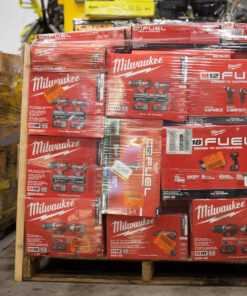
What Comes In A Milwaukee Tools Liquidation Pallet?
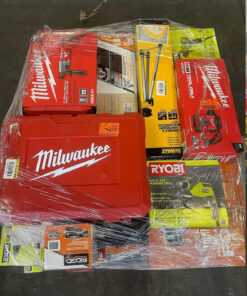
For resellers, brand names are everything. A Milwaukee tools liquidation pallet is one of the most sought-after loads in the entire industry. These brand-specific pallets have a higher cost but also a much higher resale value, as the Milwaukee brand commands premium pricing and has a loyal following.
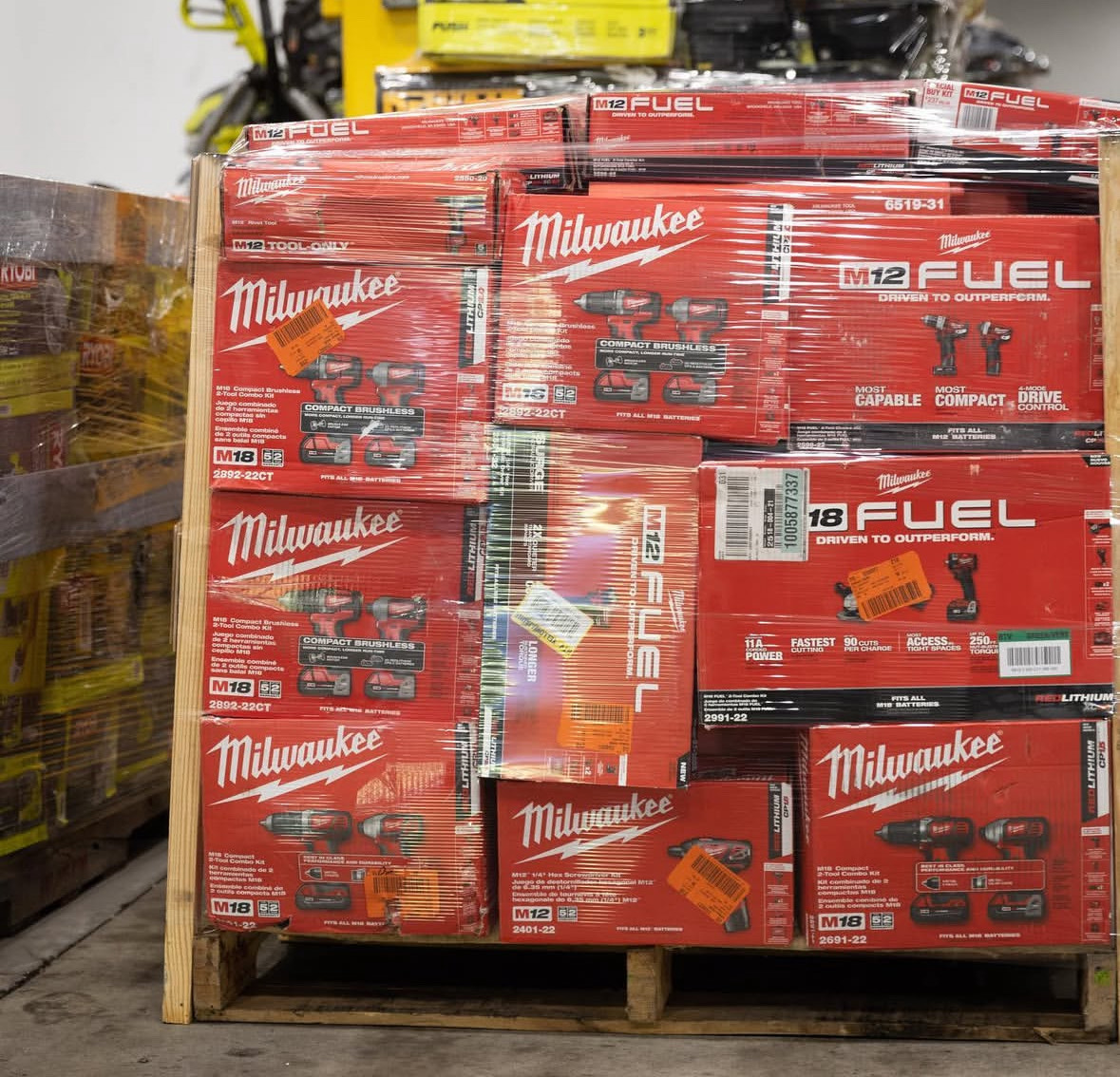
A typical Milwaukee pallet will not just be drills. It can contain a huge mix of items from their product line, including:
- M18 and M12 power tools (drills, impact drivers, saws)
- Hand tools (wrenches, screwdrivers, tape measures)
- Packout storage solutions
- Batteries and chargers
- Accessories like saw blades and drill bits
These pallets are often comprised of customer returns, meaning you will need to test batteries, check chargers, and ensure all parts are present. But a single working M18 Fuel combo kit can often sell for enough to cover a large portion of the pallet’s cost.
These pallets sell out fast. Order your Milwaukee Tools Liquidation Pallet today and unlock unmatched value on premium power and hand tools. We have limited stock available, so secure your lot before it’s gone.
Why Choose Our Milwaukee Liquidation Pallets?
Not all Milwaukee pallets are created equal. When you buy from Direct Wholesale Liquidation, you are buying from a trusted, top-tier supplier. We have direct contracts with major retailers, which means we get a consistent supply of authentic, unprocessed return pallets. This allows us to offer you fresh inventory that hasn’t been “cherry-picked” by other liquidators.
Our process is transparent. You can see the original MSRP, the item count, and the warehouse location for each pallet. We handle all the logistics to get your pallet from the warehouse to your door.
To order a Milwaukee Tools Liquidation Pallet, simply:
- Register for a free wholesale account.
- Go to our “Tool Pallets” category.
- Filter by “Milwaukee” or browse our new arrivals.
- Add the pallet to your cart and get an instant, all-in-one freight quote.
- Check out securely and wait for your pallet to arrive.
This table shows an example of what you might find on a manifest. Each pallet is unique, but this gives you an idea of the value.
| Item Description | Quantity | Condition | Example Resale Channel |
| M18 FUEL Hammer Drill/Driver Kit | 3 | Untested Return | eBay (as “Used” or “Parts”) |
| M12 HACKZALL Recip Saw | 5 | Untested Return | Facebook Marketplace |
| PACKOUT Rolling Tool Box | 2 | Untested Return | Local Sale |
| SHOCKWAVE Impact Duty Bit Set | 10 | Untested Return | Flea Market (as individual items) |
The value packed into a single pallet is clear. View our current Milwaukee pallet inventory now.
Other Brand Specific And Specialized Tool Pallets
While Milwaukee gets a lot of attention, it’s not the only profitable brand. We carry a wide range of other brand-specific and specialized tool pallets. These can be fantastic opportunities because they often have less competition from other resellers.
We regularly source pallets from other power-house brands like:
- RYOBI: Extremely popular with homeowners and DIYers. These pallets move very quickly.
- RIDGID: Known for its professional-grade tools and lifetime warranties, giving them high resale value.
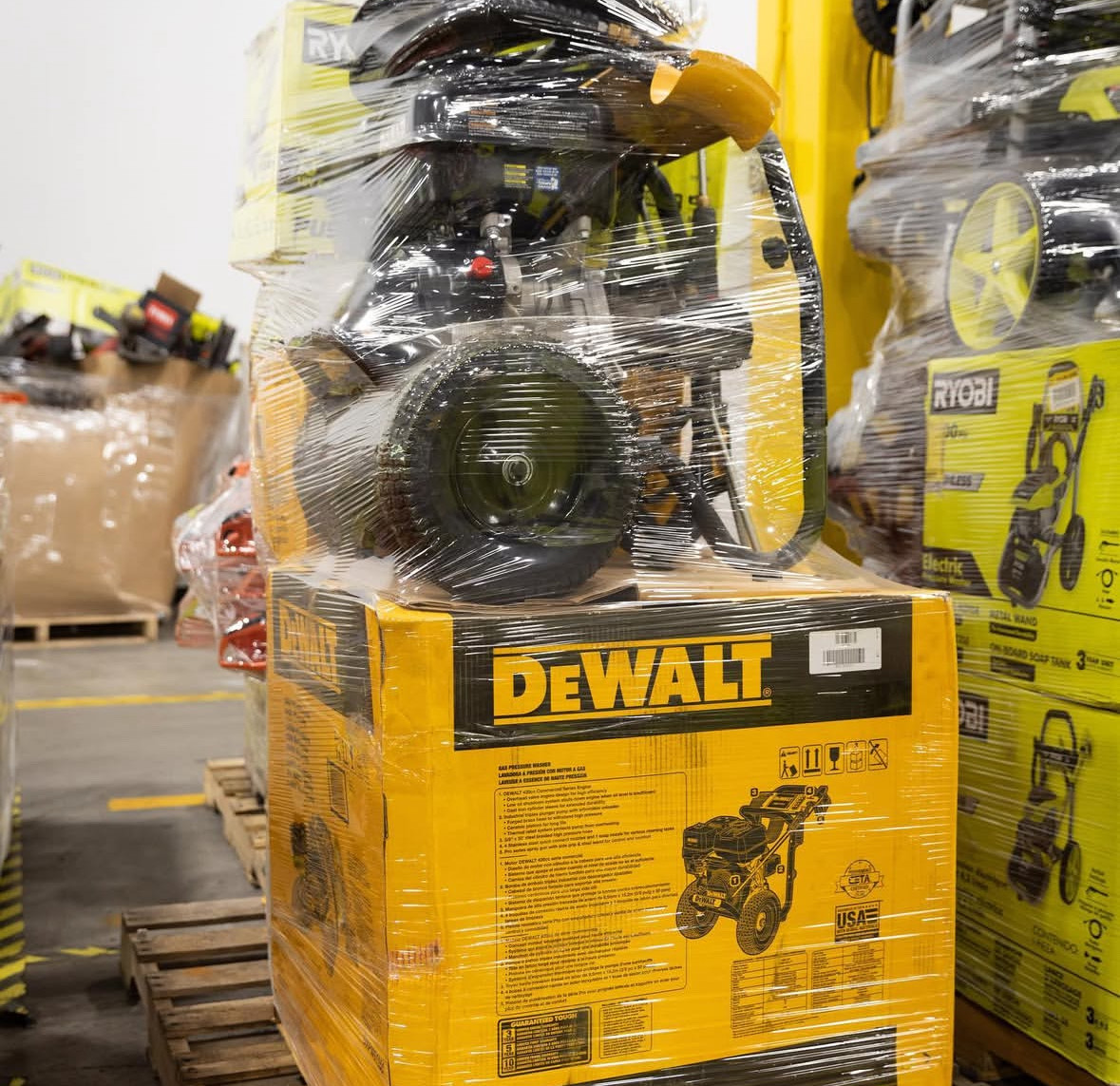
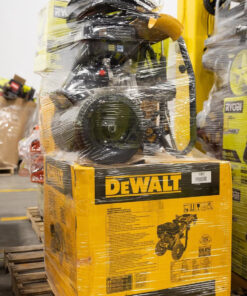
- DEWALT: Another premium brand with a massive following among contractors.
We also see specialized pallets that focus on specific equipment, such as outdoor power equipment or automotive tools.
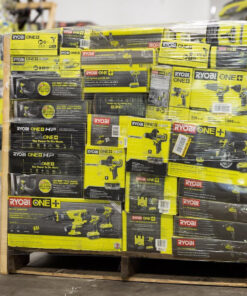
What Is Included In A RYOBI Tools Pallet?
A RYOBI tools pallet is a perfect example of a high-demand, high-turnover lot. Because RYOBI serves the DIY and homeowner market, their tools are extremely popular on resale platforms. These pallets are typically sold “AS-IS” with a specific Lot ID.
A typical RYOBI pallet (Lot ID: 8745-R) might contain a mix of 18V ONE+ tools, 40V outdoor equipment, and various hand tools. The “AS-IS” condition means you are accepting the risk. You might get a pallet full of nearly new items, or you might get a pallet that requires significant testing and repair. This risk is precisely why the entry cost is so low and the profit ceiling is so high.
Why Outdoor Power Equipment Pallets Are Worth Buying?
Do not overlook specialized pallets like Mixed Tool Pallets Outdoor Power Equipment Pallets or a GAS PRESSURE WASHER PALLET. These items are often seasonal, meaning retailers liquidate them at massive discounts in the off-season.
This is a huge opportunity. You can buy a pallet of returned lawn mowers, leaf blowers, and pressure washers in the winter for a few hundred dollars. You then spend the winter testing and tuning them up. When spring hits, you can sell them individually for a massive profit as demand soars. This seasonal flipping strategy is used by many of our most successful buyers.
How Does Power Tool Liquidation Compare To General Tool Pallets?
Power tool liquidation pallets are a sub-category of general tool pallets. While a general pallet will have a mix of everything (hammers, screwdrivers, tape measures), a power tool pallet focuses on higher-value, battery-operated and corded items.
The upside is a much higher average selling price per item. The downside is that these items require more sophisticated testing. You will need to have a good set of batteries and chargers on hand to test each tool. For resellers who are willing to do this work, the margins are excellent. You can often sell a single “tool-only” drill for $40-$50, and a full kit for over $100.
What Is The Significance Of Power Tool Return Pallets?
Power tool return pallets carry the highest risk and the highest reward in the industry. The “return” status is key. A customer may have returned a $300 drill kit simply because the battery was dead on arrival. For the retailer, it’s a defective item. For you, it’s a $300 kit that needs a $50 battery.
This is the arbitrage. You are buying the potential of the items. You are betting that your ability to test, diagnose, and repair is better than the average person’s. When you buy these pallets, you are not just buying tools; you are buying a business opportunity that rewards your effort and expertise. Safety is also paramount; always inspect electronics and power tools for safety issues, referencing resources like the Consumer Product Safety Commission (CPSC) for recall information.
What Is The Role Of Tool Liquidation Stores Near Me?
Local “tool liquidation stores near me” or general “liquidation pallets tools stores” act as the final link in the chain. These are often B2C (business-to-consumer) stores. They are run by resellers just like you. They buy wholesale pallets from national suppliers (like Direct Wholesale Liquidation), process them, and then sell the individual items in a retail storefront.
For you, the B2B reseller, this is proof of the business model. But you don’t want to buy from them; you want to be them. The typical experience of buying from a local store involves paying a marked-up price for items that have already been picked over.
To get the best profit, you must buy directly from the source. By partnering with us, you skip the middleman and get access to the same unprocessed, high-margin pallets that the big retailers use. Why pay someone else’s markup when you can register for free and buy direct?
Frequently Asked Questions About Tool Liquidation Pallets
Where Can I Find Authentic Tool Liquidation Pallets Near Me?
While you can search for local warehouses, the most reliable way to find authentic tool liquidation pallets is through a verified, online wholesale supplier. Local “near me” options are often just other resellers. To get authentic, unprocessed pallets, you need to buy from a primary source like Direct Wholesale Liquidation, which has direct contracts with national retailers. This gives you access to fresh inventory shipped directly from the source.
How Do Auctions Help You Get The Best Tool Pallet Discounts?
Auctions are a way to purchase pallets where the final price is set by buyer demand. This can be a great way to get a discount if you are the highest bidder and the auction closes at a low price. However, auctions can also be competitive, driving prices up. For buyers who need inventory immediately, our “Buy Now” pallets offer a transparent, fixed price. You know your exact cost upfront, including freight, which makes it easier to calculate your potential profit without the stress of a bidding war.
5 reviews for Buy Tool Liquidation Pallets (45-120+ items-$750)
Add a review
Related products
Tool pallets for sale
Tool pallets for sale
Tool pallets for sale
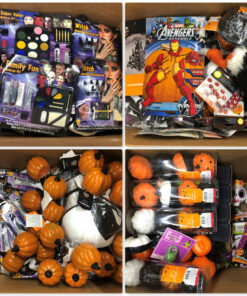
Buy Halloween Pallets For Sale (200+ Costumes & Decor From $399)
Tool pallets for sale
Tool pallets for sale

Tool pallets for sale
Tool pallets for sale
Buy Milwaukee Pallets For Sale (50+ Premium Items from $1,200)


Tool pallets for sale
Daniel R. –
Bought my first tool pallet to test the waters. Manifest was accurate and the mix was fair. A few open-box items but plenty of value overall.
Marcus L. –
Solid experience from start to finish. Freight arrived on time and the pallet was well wrapped. Already sold half the items locally.
Evan P. –
I liked the brand mix and the condition variety. Needed some testing, but that’s expected with returns. Would buy again.
Joshua M. –
Great value for the price. A few tools needed minor cleaning, but resale margins were still strong.
Aaron K. –
This pallet helped restock my flea market booth quickly. Customers recognize the brands immediately.