
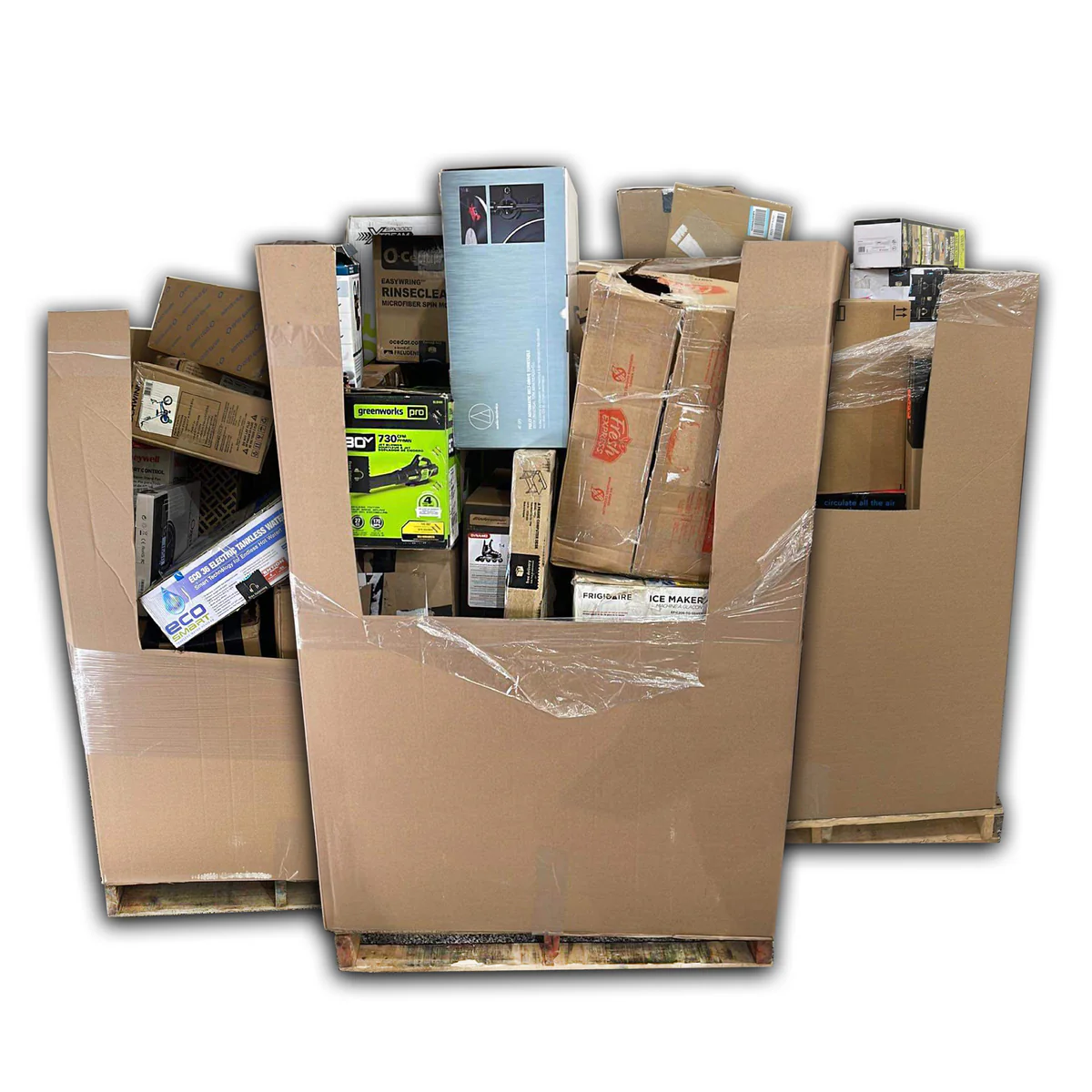
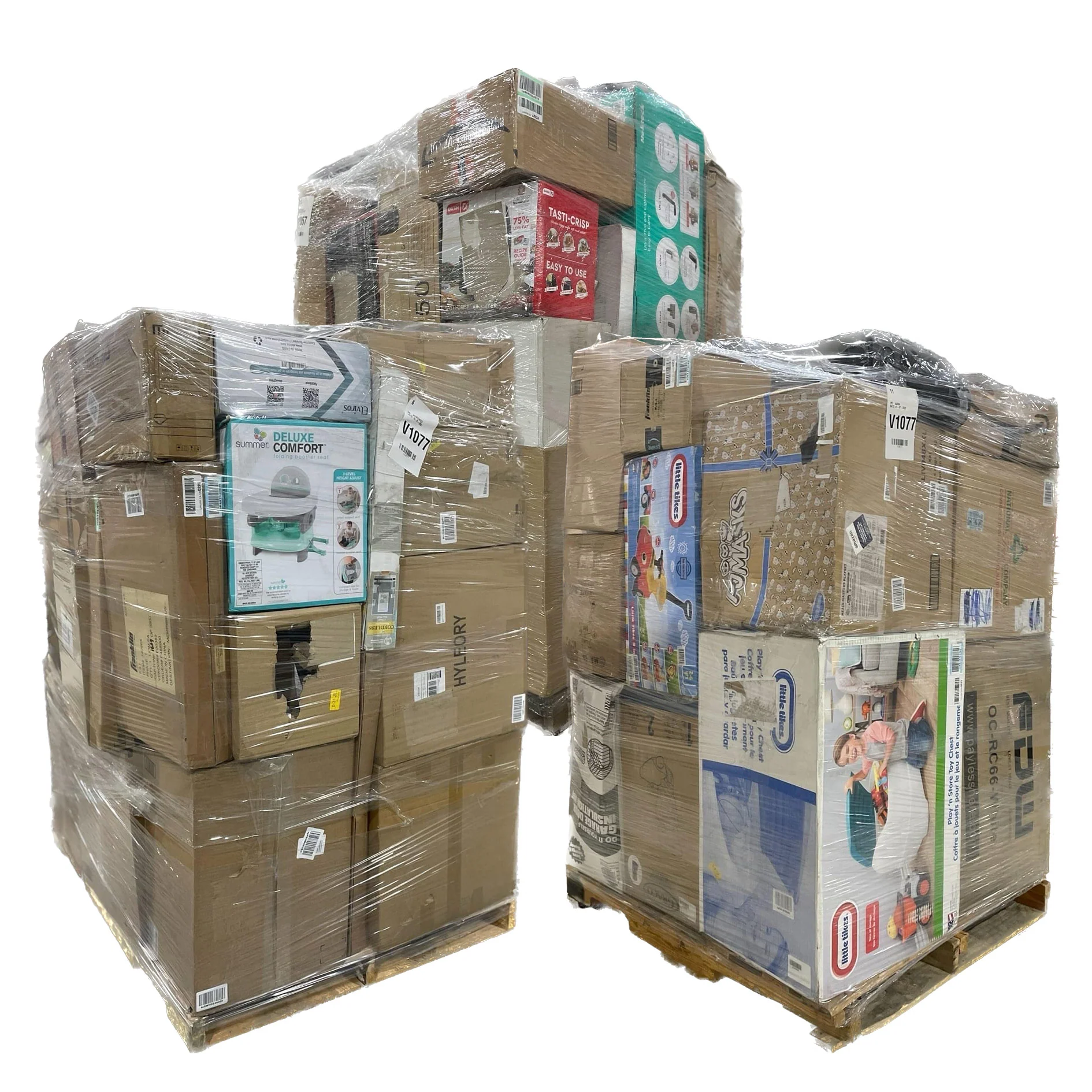
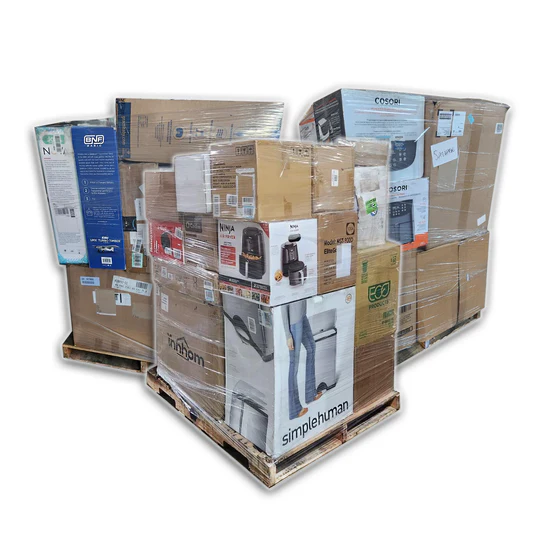
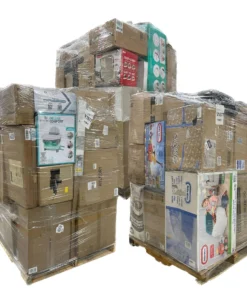
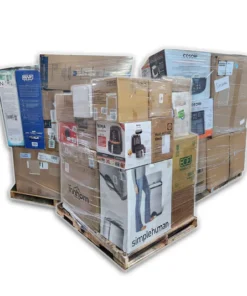
Buy Amazon Return Pallets (100+ Mixed Items From $325)

$325.00
Current Price: From $325 per pallet
Status: In Stock – High Demand
Seller: Verified Amazon Return Liquidator
Source: Amazon Customer Returns & Overstock Inventory
Condition: Mixed – Untested Returns, Shelf Pulls & Overstock
Items per Pallet: 100+ Assorted Items
Estimated Retail Value: Up to $3,500+
Packaging: Shrink Wrapped & Manifested
Distribution Agreement Required: No
Shipping Area: Fast Freight Delivery Across USA & Worldwide
Amazon return pallets are one of the most profitable liquidation options for resellers. Each pallet includes a wide mix of high-demand products from Amazon’s customer returns and overstock inventory. Perfect for eBay sellers, flea market vendors, bin store owners, and online resellers looking to maximize ROI.
What’s Inside Amazon Return Pallets
Items vary by load but typically include:
• Small electronics
• Home and kitchen appliances
• Apparel and shoes
• Toys and baby products
• Tools and hardware
• Health and beauty products
• Pet supplies
• Seasonal merchandise
Example Manifest Breakdown – 120 Items Total
Electronics (35 Items)
Bluetooth speakers: 10 units
Headphones and earbuds: 15 units
Phone accessories: 10 units
Home & Kitchen (30 Items)
Small kitchen appliances: 8 units
Cookware sets: 7 units
Storage organizers: 15 units
Clothing & Apparel (20 Items)
Men’s apparel: 8 units
Women’s apparel: 10 units
Kids clothing: 2 units
Toys & Baby (15 Items)
Educational toys: 6 units
Board games: 4 units
Baby accessories: 5 units
Tools & Hardware (10 Items)
Hand tools: 6 units
Power tool accessories: 4 units
Health & Beauty (10 Items)
Skincare bundles: 5 units
Hair care products: 5 units
Most pallets contain 60% to 70% brand new or like-new merchandise, with the remaining portion being customer returns that may require light testing or repackaging.
These pallets are ideal for high-margin resale. Many buyers report strong profits after sorting, testing, and listing items individually.
Amazon Return Pallets: Mystery Boxes And Pricing Guide
The world of secondary market commerce is centered around amazon return pallets for those who want to find high-margin inventory. When items are sent back by customers, these goods are often consolidated into large bulk lots for quick disposal. This process creates a unique opportunity for small business owners and side hustlers to acquire branded merchandise at a fraction of the original retail cost.
Navailing the complexities of the liquidation market requires a solid understanding of how these goods flow. It is common for new buyers to feel overwhelmed by the variety of categories and the risks involved with uninspected inventory. By following a structured approach to sourcing and grading, the potential for profit is significantly increased.
Whether you are looking for electronics or home goods, the primary goal is to minimize risk while maximizing the recovery value of each item. This guide will walk you through the entire journey from the initial auction bid to the final sale on a marketplace. You will learn how to identify authentic sources and avoid the common pitfalls that trap inexperienced buyers in the liquidation space.
Key Takeaways
-
Amazon return pallets are comprised of customer returns and overstock items sold in bulk.
-
Authentic pallets are sourced through official liquidation partners and authorized warehouses.
-
Shipping costs often represent the largest expense after the initial purchase price.
-
Manifested pallets provide a detailed list of contents while mystery lots carry higher risk.
-
Condition grading ranges from “Brand New” to “Salvage” or “Parts Only” status.
-
Profits are maximized by cleaning, testing, and photographing individual items for resale.
-
Local sourcing can save hundreds of dollars in freight and liftgate delivery fees.
-
Direct Liquidation is a primary authorized partner for official Amazon inventory.
Amazon Return Pallets
Amazon return pallets are large wooden structures loaded with products that were previously purchased and then returned by customers. These items are collected at massive return centers where they are sorted by category and condition. Because Amazon prioritizes warehouse efficiency, the company cannot restock every single returned item as new.
These goods originate from various customer behaviors, including buyer remorse, shipping damage, or functional defects. Once the items are collected, they are wrapped in plastic film and prepared for the secondary market. The transition from a warehouse shelf to a liquidation lot happens through a complex reverse logistics network.
Bulk sales are preferred by Amazon because it allows for the rapid removal of millions of units from their inventory system. Selling individual returned items would require too much labor and floor space. By selling in bulk, the responsibility for sorting and testing is shifted to the third party buyer.
How To Buy Amazon Return Pallets?
The process of purchasing begins with creating an account on a verified liquidation platform. Most reputable sellers require a resale certificate to exempt the transaction from sales tax. Once your identity is verified, you can browse through thousands of available lots based on your budget.
There are two primary ways to secure a purchase on these platforms. Fixed-price listings allow you to buy the inventory immediately at a set cost. On the other hand, auctions require you to compete against other bidders until the clock runs out. It is often recommended that beginners start with fixed-price lots to avoid the emotional stress of bidding wars.
Buyers are strongly encouraged to explore verified liquidation partners linked on this site. Using untrusted social media sellers can lead to scams where the best items are removed before the pallet is shipped. Sourcing through official channels ensures that the manifest provided is accurate and the transaction is legally protected.
Amazon Return Pallets Near Me
Local liquidation warehouses are physical facilities that buy truckloads of returns and sell them to the public. These warehouses operate as middleman hubs between the massive Amazon centers and the local reseller. Visiting a local facility allows you to inspect the exterior of the pallet before you pay.
Reduced shipping costs are the biggest advantage of sourcing locally. Freight charges for a single pallet can often exceed three hundred dollars when shipped across the country. By using a local warehouse, you can use your own truck or trailer to transport the goods.
| Pickup vs. Freight Factor | Local Warehouse Pickup | Nationwide Freight Delivery |
| Shipping Cost | Very Low (Fuel only) | High ($200 to $600+) |
| Inspection | Visual check possible | Relies on photos only |
| Equipment | Requires own truck/trailer | Requires loading dock or liftgate |
| Speed | Same day availability | 3 to 10 business days |
| Risk | Lower transit damage | Higher transit damage risk |
Image Suggestion: A photo of a person loading a pallet into a pickup truck at a warehouse.
Alt Text: Local pickup of amazon return pallets at a liquidation warehouse.
Amazon Return Pallets For Sale
Listings for these goods are structured in two main formats: manifested and mystery. A manifested pallet includes a digital spreadsheet that lists every item, its original retail price, and its expected condition. Mystery formats are sold without a list, which means the buyer is taking a significant gamble on the contents.
Condition categories are essential for determining the value of the lot. “New” items are typically overstock that never reached a customer. “Used” items may have cosmetic wear or missing packaging. “Salvage” items are broken or incomplete and are usually only good for parts or repair experts.
Pallet sizes usually follow the standard forty-eight by forty-inch footprint. The height can vary from three feet to over six feet depending on the stack. Lot quantities can range from a single pallet to a full truckload containing twenty-six individual units.
Amazon Auction Pallets
Bidding systems for these items work similarly to eBay or other online marketplaces. A starting bid is set, and participants increase the price in small increments. It is vital to set a maximum budget before the auction begins to avoid overpaying for the inventory.
Pricing volatility is a major factor in the auction environment. If a specific category like “Small Kitchen Appliances” becomes popular, the competition can drive prices up to seventy percent of the retail value. This leaves very little room for profit after you account for fees and shipping.
Compared to fixed-price purchases, auctions offer the chance to find undervalued gems. However, the risk of losing a bid at the last second can be frustrating. Auctions are generally best for experienced sellers who understand the exact market value of the items they are chasing.
How Much Do Amazon Return Pallets Cost?
The cost of a pallet is determined by the total retail value of the items inside and their condition. Electronics pallets are usually the most expensive because the individual items have higher price points. Clothing or “General Merchandise” pallets are often the most affordable entry points for new sellers.
Low advertised prices on websites can be misleading. A pallet listed for one hundred dollars might require an additional four hundred dollars for freight and residential delivery fees. You must calculate the landed cost, which is the total price paid including every fee, before deciding if a deal is good.
| Category Type | Average Price Range | Expected Item Condition |
| Electronics | $800 to $2,500 | High tech, high risk |
| Home & Kitchen | $400 to $1,200 | Mixed used and new |
| Apparel | $200 to $600 | Mostly new with tags |
| Toys & Games | $300 to $800 | Open box, seasonal |
| Tools | $500 to $1,500 | Heavy, high resale value |
New buyers should expect to pay between five hundred and fifteen hundred dollars for a decent quality starter pallet. It is suggested that you use the pallet profitability calculator on this site to estimate your margins. This tool helps you account for marketplace fees and packing supplies that many people forget to include.
What Is The Risk Of Buying Amazon Pallets?
The risk of damaged goods is the most significant hurdle in this business. Since these are customer returns, some items may have been used heavily or broken before being sent back. You might find boxes that are empty or filled with rocks if a previous customer committed return fraud against Amazon.
Variability in resale value is another challenge. Trends change quickly, and what was popular six months ago might not sell today. If your pallet is filled with outdated accessories for old phone models, you may struggle to recover your initial investment.
There is a steep learning curve for first-time buyers regarding logistics and item processing. It takes time to learn how to test electronics and how to spot counterfeit items. Patience is required because the first few pallets are often a trial-and-error experience.
Is Amazon Liquidation Pallets A Real Thing?
Yes. The liquidation of Amazon returns is a legitimate multi-billion dollar industry. According to research on reverse logistics sustainability, companies must find secondary outlets for returned goods to maintain environmental and financial goals. Amazon partners with specific liquidation firms to handle this massive volume of merchandise.
Confusion is often created online by scammers who use Amazon branding without permission. These “fake” sites often promise high-end electronics like iPhones for twenty dollars. It is important to remember that if a deal looks too good to be true, it is likely a scam designed to steal your credit card information.
To verify authentic sellers, you should check for contact information and a physical business address. Genuine liquidation companies are transparent about their terms and do not use high-pressure sales tactics on social media. Always look for established platforms that have been in business for several years.
Buying Amazon Return Pallets From Direct Liquidation
Direct Liquidation is an authorized partner that works closely with major retailers to sell their excess inventory. Their platform provides a streamlined interface where you can sort by warehouse location and category. This partnership ensures that you are getting inventory as close to the source as possible.
Account registration requires basic business details and a tax ID for professional buyers. Once registered, the bidding mechanics are straightforward. You can place manual bids or use an “auto-bid” feature that keeps you in the lead up to your maximum specified price.
| Grading Standard | Description | Typical Value |
| Grade A (New) | Unopened, original packaging | 70% of Retail |
| Grade B (Like New) | Opened box, full working order | 50% of Retail |
| Grade C (Used) | Visible wear, missing manual | 30% of Retail |
| Untested Returns | Raw returns, no inspection | 15% to 20% of Retail |
| Salvage | Broken, for parts only | 5% of Retail |
[Internal Link: Direct Liquidation Account Setup Guide]
How Does Ordering Work?
After you win an auction or complete a fixed-price purchase, the order enters the fulfillment stage. An invoice is generated that includes the pallet price, the buyer’s premium, and any applicable taxes. Most platforms require payment within forty-eight hours via wire transfer or credit card.
Once payment is confirmed, shipping coordination begins. You will receive a Bill of Lading if you are using a third-party freight carrier. This document is the official contract between you and the carrier and is required for the driver to release the goods at the warehouse.
Documentation is critical during this phase. You should keep copies of the manifest and the invoice for your tax records. If the pallet is being delivered to a residence, you must ensure the carrier knows you need a liftgate service to lower the pallet to the ground.
Inspecting And Grading Amazon Return Pallets
Post-delivery inspection should be performed as soon as the pallet arrives. You should take photos of the pallet while it is still wrapped in plastic. If the shrink wrap is torn or the pallet looks like it was tampered with during transit, you need to note this on the delivery receipt.
Verifying the condition against the manifest is the next step. You should create a workspace where you can systematically test every electronic item and check for missing parts in sets. Discrepancies should be documented immediately to determine if a claim needs to be filed with the seller.
According to the Federal Trade Commission, businesses must be honest about the condition of the goods they sell. If you find that the inventory was intentionally misrepresented, you may have grounds for a dispute. However, most liquidation sales are “as-is,” so your primary protection is your own due diligence.
How To Sell Amazon Return Pallets?
The most common strategy is breaking down pallets into individual listings. This method allows you to capture the highest possible price for each item. While it is more labor-intensive, the total revenue is much higher than selling the entire lot to another reseller.
Itemized resale requires you to clean the products and take professional-looking photos. You should also write clear descriptions that mention any flaws or missing original packaging. Honesty in your listings will prevent your own customers from returning the items to you.
| Strategy | Speed of Sale | Profit Margin | Labor Required |
| Individual Items | Slow | Very High | Very High |
| Small Bundles | Medium | Medium | Medium |
| Bulk Resale | Very Fast | Low | Very Low |
Pricing psychology is important for returned goods. Most buyers expect a discount of at least thirty to fifty percent off the current Amazon price for an “open box” item. If your price is too close to the new price, customers will simply buy from the original retailer for the warranty.
Where To Sell Inventory From Amazon Return Pallets?
Online marketplaces like eBay and Mercari are the most popular choices for shipping small items. These platforms have a massive audience and provide built-in tools for printing shipping labels. Electronics and collectibles perform exceptionally well on these sites.
Local sales channels like Facebook Marketplace or Craigslist are better for large or heavy items. By selling locally, you avoid the high cost of shipping a heavy blender or a vacuum cleaner. Local sales are usually cash-based, which means you get your money immediately without waiting for a platform to process the payment.
Physical venues like flea markets or a small retail storefront offer a way to move volume quickly. You can set up “bin stores” where every item is sold for a flat price that decreases throughout the week. This is an excellent way to clear out the lower-value items from your amazon return pallets.
Pros And Cons Of Buying Amazon Return Pallets
The main advantage is the low acquisition cost of branded merchandise. You can often buy products for ten to twenty cents on the dollar. This variety allows you to stock a diverse shop without needing a direct relationship with dozens of manufacturers.
However, the drawbacks include inconsistency and high labor requirements. One pallet might be a gold mine while the next is a total loss. You must also have space to store the inventory and the time to process hundreds of individual units.
Pros:
-
High potential for high profit margins.
-
Access to a wide variety of product categories.
-
Scalable business model from home.
-
Sustainable way to reduce retail waste.
Cons:
-
Unpredictable item conditions and defects.
-
High shipping and storage costs.
-
No manufacturer warranties for customers.
-
Time-consuming testing and listing process.
Types Of Amazon Return Pallets
Category-specific pallets allow you to focus on a niche that you understand well. If you are knowledgeable about computers, an electronics lot is a great choice. If you prefer low-risk items, clothing or textiles are generally easier to handle because they do not have moving parts that can break.
Resale velocity is the speed at which items sell. Electronics and toys typically have high velocity, meaning they sell quickly once listed. Furniture or specialized industrial tools may have a slower velocity but offer much higher individual profits.
The U.S. Census Bureau tracks retail trends which show that home goods and electronics remain the top categories for online consumer spending. Aligning your pallet purchases with these trends can help ensure that your inventory does not sit on the shelf for months.
Frequently Asked Questions About Amazon Return Pallets
What Are Amazon Return Pallets And How Do They Work?
They are bulk lots of customer-returned goods that Amazon sells to clear warehouse space. These items are sold to liquidation companies who then sell them to individual resellers through auctions or fixed-price listings. The buyer takes on the risk of condition in exchange for a significantly lower purchase price.
How Much Do Amazon Return Pallets Cost For New Buyers?
New buyers should expect to spend between $500 and $1,500 for a single pallet when including shipping. While the pallet itself might cost $200, freight charges and residential fees add up quickly. It is best to start with a “General Merchandise” lot to learn the process without risking a large amount of capital.
Be the first to review “Buy Amazon Return Pallets (100+ Mixed Items From $325)”
Related products


Liquidation Pallets
Apple Liquidation Pallets


Liquidation Pallets


Liquidation Pallets

Liquidation Pallets


Apple Liquidation Pallets

Liquidation Pallets


Liquidation Pallets
Reviews
There are no reviews yet.